



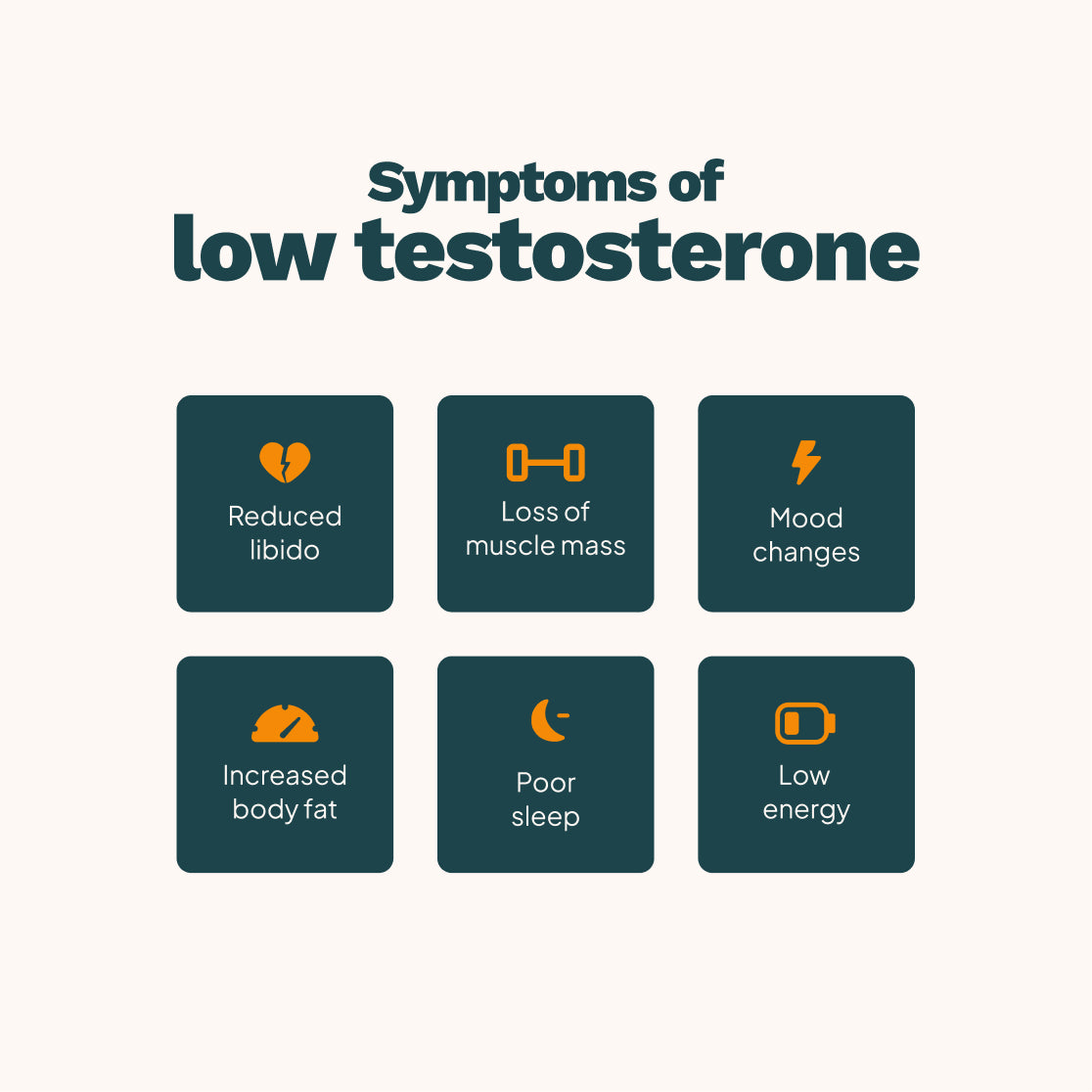
Low energy is a recognised symptom of testosterone deficiency, and studies suggest fatigue can improve with testosterone treatment in men with hypogonadism [1]. However, a lack of sleep, stress, medication, thyroid function, or anaemia can all influence how energetic you feel.
So, if you’re on TRT but still tired, it’s worth looking beyond the obvious. Here are seven reasons you may not feel better yet, and what to discuss at your next TRT review.
- How long does TRT take to improve energy?
- Your TRT may simply need more time
- Your testosterone level may not be right for you yet
- Total testosterone may not tell the whole story
- Your sleep may still be the problem
- Something else may be causing the fatigue
- Your body may not be getting enough recovery
- Another hormone may be affecting how you feel
- What should you check if you’re tired on TRT?
- Don’t increase your dose because you’re tired
- When should you speak to your TRT doctor?
How long does TRT take to improve energy?
TRT tends to work in stages rather than all at once.
In the first few weeks, you may start to notice changes in energy, libido, sleep, mood, or motivation.
Over the next couple of months, improvements in sexual function, physical drive, and general wellbeing may become more obvious. Changes in strength and body composition usually take longer, often becoming more noticeable after three months, with some benefits continuing to build beyond six months.
That means feeling tired during the early stages of treatment doesn’t automatically mean something’s wrong.
Read our guide to how long TRT takes to work for more information.
-
Your TRT may simply need more time
It’s easy to compare your experience with someone who says they felt transformed two weeks after their first dose of testosterone. In reality, TRT response is much more variable.
Energy may start improving relatively early, but the maximum benefit can take considerably longer. In a long-term study of men with hypogonadism, fatigue continued to improve during testosterone treatment over 12 months [1].
Your response may also depend on:
- How low your testosterone was before treatment
- How long you’ve had symptoms
- The type of TRT you’re using
- Your dose and dosing schedule
- Other health conditions
- Sleep, exercise, nutrition, and stress
If you’ve only recently started TRT, the answer may simply be to give your treatment time to settle rather than making repeated changes.
This is one reason frequent dose tweaks can be counterproductive. You need a period of stability to understand how a particular protocol is actually working for you.
-
Your testosterone level may not be right for you yet
TRT can only relieve symptoms effectively if your treatment produces an appropriate testosterone level.
Sometimes the initial dose isn’t quite right. Your testosterone may still be lower than intended, or levels may fluctuate too much between doses.
With injectable TRT, testosterone rises after an injection and then gradually falls. If the gap between doses doesn’t suit you, you may notice symptoms returning towards the end of the interval.
With gels and creams, absorption can vary between people, and factors such as application technique, missed applications, or washing the area too soon can influence exposure.
However, you shouldn’t alter the dose yourself.
Your clinician will consider:
- Your testosterone results
- When the blood sample was taken in relation to your dose
- Your symptoms
- Your current dose and frequency
- How consistently you’re using treatment
- Side effects and safety markers
Your doctor will aim to find a safe, stable level that improves symptoms without unnecessary side effects.

-
Total testosterone may not tell the whole story
You can have a total testosterone result that looks perfectly reasonable and still not feel quite right.
That’s because most testosterone in the blood is attached to proteins, particularly sex hormone-binding globulin, or SHBG. Only a small proportion is free and readily available to tissues.
If your SHBG is unusually high or low, your total testosterone result may not accurately reflect the amount of testosterone available to your body.
Your doctor may check:
- Total testosterone
- SHBG
- Albumin
- Calculated free testosterone
This is particularly useful when your symptoms and total testosterone result don’t seem to match.
It’s also important that your blood test is taken at the right time for your TRT preparation. If you take testosterone injections, doctors often assess a trough level by testing shortly before the next dose is due. If your testosterone is delivered topically, taking a blood test two to four hours after application could affect the results.
A poorly timed test can provide a misleading snapshot and potentially lead to unnecessary changes in treatment.
-
Your sleep may still be the problem
You can have excellent testosterone levels and still feel exhausted if you’re sleeping badly.
Poor sleep doesn’t just mean not getting enough hours. Fragmented sleep, insomnia, snoring, or repeatedly waking through the night can leave you feeling unrefreshed even after spending eight hours in bed.
One condition worth paying particular attention to is obstructive sleep apnoea (OSA). Sleep apnoea causes repeated interruptions to breathing during sleep, which can prevent you reaching restorative sleep.
OSA symptoms include:
- Loud snoring
- Witnessed pauses in breathing
- Unrefreshing sleep
- Morning headaches
- Daytime sleepiness or fatigue
- Waking frequently during the night
- Problems with concentration or memory
Being male, getting older, obesity, type 2 diabetes, and high blood pressure are among the factors associated with a higher likelihood of OSA.
Importantly, TRT doesn’t treat sleep apnoea, and severe untreated obstructive sleep apnoea needs clinical consideration when testosterone therapy is being managed [3].
If your testosterone has improved but you’re waking exhausted every morning, your sleep may deserve as much attention as your hormone results.
-
Something else may be causing the fatigue
Fatigue is frustratingly non-specific.
Low testosterone can contribute to tiredness, but so can dozens of other conditions. Correcting testosterone deficiency won’t automatically correct an unrelated health problem.
Depending on your symptoms and medical history, your doctor may consider whether another cause needs investigating, such as:
- Anaemia or iron deficiency
- Vitamin B12 or folate deficiency
- An underactive thyroid
- Diabetes or poor blood glucose control
- Sleep apnoea
- Chronic infection or inflammatory illness
- Kidney or liver disease
- Depression or anxiety
Research highlights the close relationship between testosterone deficiency, obesity, type 2 diabetes, metabolic disease, and wider poor health. These conditions may coexist rather than one being the sole explanation for your symptoms [4].
TRT should not become a reason to stop looking at the rest of your health.
-
Your body may not be getting enough recovery
TRT can improve your motivation to train, and many men start exercising more once they begin to feel better.
That’s generally positive, but there’s a catch.
Increasing your training while cutting calories, losing weight, sleeping poorly, or working long hours can leave you with an energy deficit that testosterone won’t fix.
This is especially relevant if you’re also:
- Dieting aggressively
- Losing weight quickly
- Using weight loss medication that reduces your appetite
- Increasing gym sessions or training intensity
- Not getting enough protein
- Drinking alcohol regularly
- Working long or irregular hours
If your gym performance is dropping, your legs feel heavy all the time, your sleep is worsening, and you’re permanently exhausted, doing more may not be the answer.
Keep the basics consistent
You don’t need to complicate your lifestyle.
Instead, focus on the fundamentals:
- Eat enough protein and overall nutrition
- Include regular resistance exercise without training to exhaustion every day
- Stay physically active outside the gym
- Prioritise consistent sleep
- Keep alcohol within sensible limits
- Build recovery days into harder training periods
-
Another hormone may be affecting how you feel
Testosterone doesn’t work in isolation. If you’re still tired on TRT, your clinician may sometimes need to look at other hormones that can influence energy, mood, libido, and general wellbeing.
One example is oestradiol. Some testosterone is naturally converted into oestradiol, so levels often rise after starting TRT. This is usually a normal part of treatment, and a higher result doesn’t automatically mean something needs correcting. However, symptoms and hormone results should be considered together if you’re not feeling well.
Prolactin may also be relevant, particularly if low libido, erectile difficulties, or other symptoms accompany fatigue. Thyroid hormones can affect energy too, although thyroid problems are separate conditions rather than a direct effect of TRT.
It’s important not to chase individual hormone results or try to correct them yourself. If your testosterone level looks appropriate but you still don’t feel right, your doctor can decide whether checking other hormones would add useful information.
What should you check if you’re tired on TRT?
If you’ve been on TRT for a while and fatigue is still affecting your day-to-day life, your next review should look beyond a single testosterone number.
Your symptoms
Has anything improved since starting treatment?
Think beyond tiredness. Changes in libido, erections, mood, concentration, strength, motivation, sleep, and exercise recovery can help build a clearer picture of whether TRT is having an effect.
Your TRT routine
Your doctor may ask about:
- Missed or delayed doses
- Injection technique
- Gel or cream application
- Changes in dose timing
- Side effects
- Other medicines
- Changes in weight, alcohol intake, lifestyle, or general health
Your blood results
TRT monitoring generally includes testosterone and haematocrit, with PSA monitoring where clinically appropriate. Haematocrit is particularly important during TRT because testosterone stimulates red blood cell production.
Depending on the cause of your fatigue, your doctor may also recommend other investigations.
Don’t increase your dose because you’re tired
When you’re still exhausted, it’s tempting to assume you simply need more testosterone.
But fatigue isn’t a reliable way of judging dose on its own.
More testosterone won’t necessarily mean more energy, and pushing levels unnecessarily high can increase the risk of side effects, including raised haematocrit, acne, fluid retention, and hormone-related symptoms.
Before changing your protocol, ask:
- Is my testosterone actually low on correctly timed blood tests?
- Have my results been stable?
- Has free testosterone been considered where appropriate?
- Am I sleeping properly?
- Have other causes of fatigue been considered?
- Have I given this protocol enough time?
When should you speak to your TRT doctor?
You don't need to wait until your next routine review if something doesn't feel right.
Get in touch if:
- Your fatigue is getting significantly worse
- You feel weaker rather than stronger
- Your symptoms haven't improved after several months on a stable protocol
- Your testosterone remains low despite treatment
- You develop significant side effects
- You're struggling with persistent sleepiness or possible sleep apnoea
- Your mood has deteriorated
- You're concerned about your blood results
Seek urgent medical assessment for severe breathlessness, chest pain, fainting, sudden neurological symptoms, or other acute symptoms rather than assuming they're related to TRT.
Not sure where to start? Use our simple Get Started tool.

References
-
Ferreira, M.A. and Mendonça, J.A. (2022) Long-term testosterone replacement therapy reduces fatigue in men with hypogonadism, Drugs in Context, 11, 2021-8-12. doi: 10.7573/dic.2021-8-12.
-
National Institute for Health and Care Excellence (2021) Obstructive sleep apnoea/hypopnoea syndrome and obesity hypoventilation syndrome in over 16s. NICE guideline NG202. London: NICE.
-
Bhasin, S., Brito, J.P., Cunningham, G.R., Hayes, F.J., Hodis, H.N., Matsumoto, A.M., Snyder, P.J., Swerdloff, R.S., Wu, F.C. and Yialamas, M.A. (2018) Testosterone therapy in men with hypogonadism: An Endocrine Society clinical practice guideline, The Journal of Clinical Endocrinology & Metabolism, 103(5), pp. 1715–1744. doi: 10.1210/jc.2018-00229.
-
European Association of Urology (2026) Male hypogonadism, EAU Guidelines on Sexual and Reproductive Health. Arnhem: European Association of Urology.

Share:
Why isn't TRT working after three months? Reasons, results, and solutions
TRT monitoring: why testosterone alone isn’t enough