



Feeling tired is one of the most common health complaints among men. Whether it’s long workdays, poor sleep, stress, or lifestyle pressures, many men find themselves asking the same question: why am I so exhausted all the time?
Because testosterone is closely associated with energy, strength, and vitality, perhaps you may be wondering whether it’s playing a role in why you’re feeling so tired. But while low testosterone fatigue is a recognised pattern, fatigue itself is complex and can have many possible causes.
Understanding how testosterone links to your energy levels can help you make more informed decisions about your health.
- The link between testosterone and fatigue
- How testosterone influences energy
- General fatigue vs low testosterone
- When other factors might cause fatigue
- The role of proper testing for low testosterone fatigue
- Why DIY supplement approaches are risky
The link between testosterone and fatigue
When you’re constantly tired, everyday factors like poor sleep, stress, or a busy lifestyle are usually the first explanations people consider. However, if fatigue persists, particularly alongside other changes, hormones such as testosterone may become part of the picture.
Common signs of low testosterone:
- Feeling tired all the time (even after rest)
- Reduced motivation or drive
- Poorer gym performance or slower recovery
- Difficulty concentrating (“brain fog”)
- Lower sex drive
These experiences can be frustrating and are often described as part of the broader low T symptoms in men. However, fatigue alone does not automatically indicate a hormone problem.
How testosterone influences energy
Testosterone plays several important roles in the body that can affect how energetic you feel. Here are four ways that testosterone affects your energy:
Red blood cell production
Testosterone helps regulate red blood cell production. Lower testosterone levels may contribute to reduced red cell mass in some men, which can influence feelings of tiredness or reduced stamina [1].
Muscle mass and physical recovery
Healthy testosterone levels support muscle maintenance and recovery. Declining levels may affect strength, endurance, and how quickly your body recovers from exercise — sometimes leading to a sense of persistent fatigue.
Mood, motivation, and mental energy
Testosterone is also linked to mood and motivation. Low T levels may coincide with reduced drive, lower confidence, or mild mood changes, all of which can influence your perceived energy levels [2].
Sleep regulation
Hormones and sleep are closely connected. Disturbed sleep patterns can affect testosterone production, and low testosterone may also influence sleep quality — meaning each can affect the other.
General fatigue vs low testosterone
The all-important question is how do you know when feeling tired is more than just fatigue, and could be a sign of low testosterone? While fatigue is extremely common, certain patterns make testosterone more likely to warrant investigation.
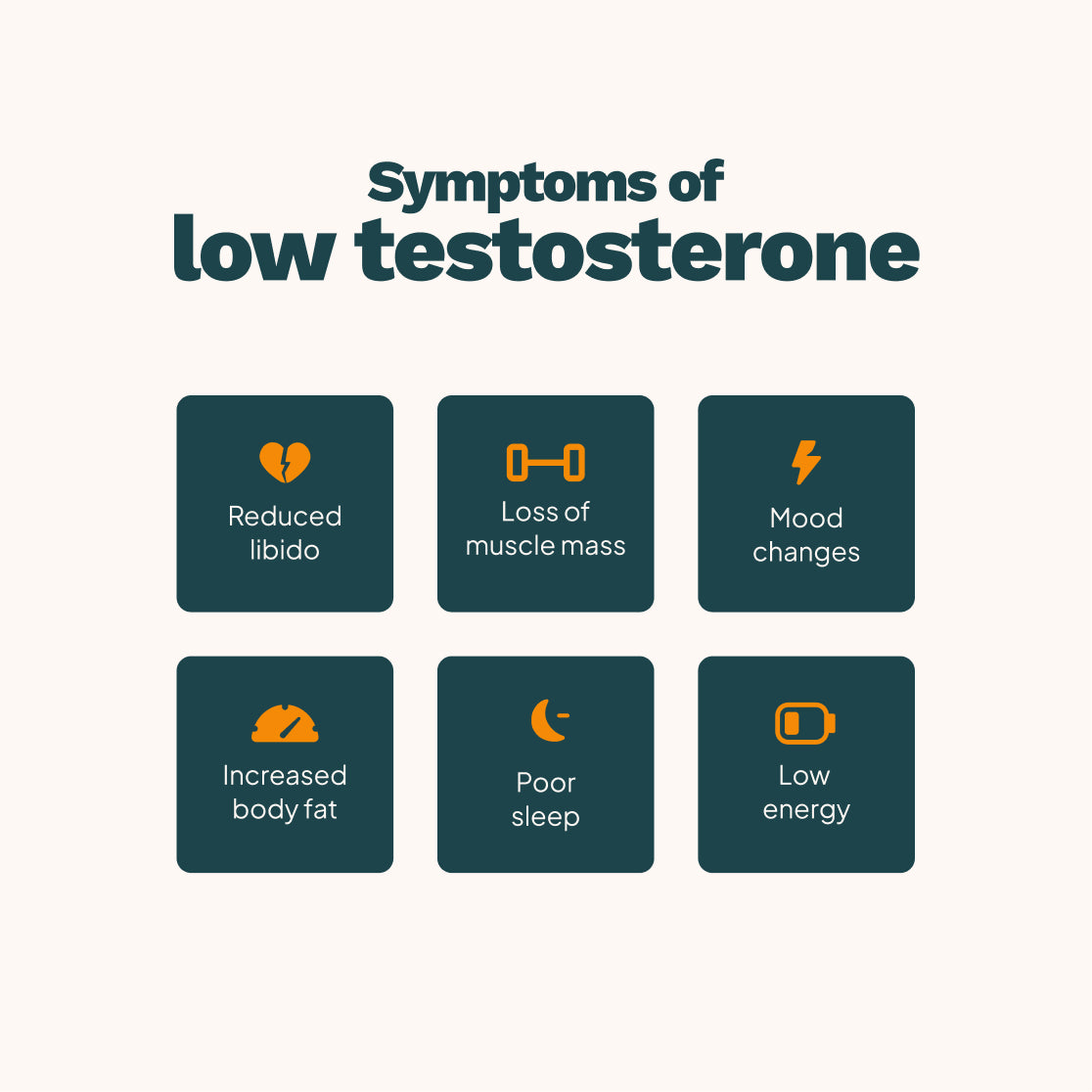
You may consider testing for low testosterone if fatigue is accompanied by:
- Persistent tiredness despite adequate sleep
- Reduced libido or sexual interest
- Loss of muscle mass or strength
- Increased body fat
- Mood changes or reduced motivation
Importantly, testosterone-related fatigue usually appears alongside other symptoms of low testosterone, not in isolation [3].
If you think you may have low testosterone, our Testosterone Blood Test is simple, easy to take at home, and includes recommended next steps.

When other factors might cause fatigue
Although testosterone can affect energy levels, fatigue in men is more often driven by everyday health and lifestyle factors. Feeling persistently tired does not automatically point to a hormone imbalance, and in many cases, the underlying causes are both common and manageable.
Here are four factors to consider trying and improve or restore your energy levels:
1. Sleep
Sleep quality is one of the most significant influences on how energised you feel. Fragmented sleep, irregular schedules, or conditions such as obstructive sleep apnoea can leave you feeling unrefreshed even after a full night's sleep. Sleep disruption is strongly associated with reduced concentration, low mood, and daytime fatigue [4].
2. Stress
Psychological strain also plays a major role. If you’re experiencing chronic stress, work pressures, or burnout, your sleep and energy levels can be affected. Over time, ongoing stress may contribute to a physical sense of mental exhaustion. Similarly, depression and low mood are well-recognised causes of fatigue, often accompanied by reduced interest, poor sleep, and changes in appetite [4].
3. Medical factors
Persistent tiredness is often linked to a range of common health issues. Low iron levels, for example, can reduce the oxygen supplied to your muscles and tissues, which may leave you feeling unusually depleted, and an underactive thyroid can slow the body’s normal energy regulation. In practice, these causes are seen far more frequently than genuine testosterone deficiency.
4. Lifestyle factors
Daily habits often play a bigger role in energy levels than many people realise. Alcohol can interfere with restful sleep and recovery, and consistently pushing your body too hard in training may leave you feeling worn down and underperforming. Often, this type of fatigue is a sign that your body needs time to recover rather than an indication of a hormonal problem.
Because these contributors are widespread, they should always be explored when assessing the causes of your fatigue before assuming testosterone is responsible.
The role of proper testing for low testosterone fatigue
If you’re concerned about fatigue and testosterone, reliable testing is the only way to understand what your hormone levels are actually doing, rather than relying on guesswork.
When blood tests indicate consistently low testosterone levels, and this aligns with your symptoms, treatment options such as testosterone replacement therapy (TRT) may be discussed with a clinician. For some men, appropriately prescribed TRT can improve energy levels, mood, and overall wellbeing by restoring hormone levels to a healthy range. Treatment decisions, however, should always be individualised and based on both blood results and clinical assessment.
Morning testing matters
Testosterone levels naturally fluctuate throughout the day. Clinical guidelines recommend morning blood testing, when levels are typically highest and most reliable [1].
One result isn’t always enough
Testosterone interpretation is rarely based on a single number. Borderline or unexpected results often require repeat testing to confirm patterns.
Assess symptoms and blood results together
Diagnosis depends on both your testosterone levelsand clinical symptoms. A low result without symptoms — or symptoms with normal testosterone levels, requires careful clinical judgement.
Why DIY supplement approaches are risky
Products claiming to support testosterone levels are easy to find, but their benefits are often overstated and not always backed by robust clinical research. Trying to manage suspected hormone issues without proper testing or medical input can be misleading and may postpone identifying the real cause of your symptoms.
Testosterone is a hormone, not a general energy booster — and decisions around it should be medically guided.
Fatigue is real, common, and often multi-factorial. While fatigue and low testosterone can be linked, testosterone is only one possible piece of a much broader puzzle.
Not sure where to start? Use our simple Get Started tool.
References
-
Bhasin, S., Brito, J.P., Cunningham, G.R., Hayes, F.J., Hodis, H.N., Matsumoto, A.M., Snyder, P.J. and Wu, F.C.W. (2018) ‘Testosterone therapy in men with hypogonadism’, Journal of Clinical Endocrinology & Metabolism. (Accessed 18 February 2026).
-
Walther, A., Breidenstein, J. and Miller, R. (2019). ‘Association of testosterone treatment with alleviation of depressive symptoms’. JAMA Psychiatry. (Accessed 18 February 2026).
-
Grossmann, M. (2018) ‘Low testosterone in men with type 2 diabetes’, Journal of Clinical Endocrinology & Metabolism. (Accessed 18 February 2026)
-
National Institute for Health and Care Excellence (NICE) (2023) ‘Fatigue – Clinical Knowledge Summary’. (Accessed 18 February 2026).

Share:
Oestrogen and TRT: Should you be concerned about high oestrogen levels?
Peptides for muscle growth and fat loss: what the evidence says