



You have the symptoms. The tiredness. The low libido. The brain fog. The poor recovery. Maybe even the drop in motivation, muscle strength, or confidence.
Then your testosterone blood test comes back normal.
It's frustrating, and it can leave you feeling like you are back where you started. But a normal total testosterone result doesn't always close the case. Symptoms still matter, and in some men, the next step is looking more closely at free testosterone, SHBG, your timing of testing, and the wider clinical picture. Current endocrine and urology guidance is clear that testosterone deficiency should be diagnosed using symptoms plus blood results, not numbers alone [1].
This guide explains why some men still have low testosterone symptoms despite normal test results, why reference ranges are not the whole story, what free testosterone and SHBG can tell you, and when it may be worth speaking to a specialist.
- Low testosterone symptoms with “normal” blood test results
- Low testosterone symptoms
- Normal testosterone ranges
- What is free testosterone?
- What is SHBG?
- When should free testosterone be checked?
- Timing matters
- What happens next if symptoms are still present?
- Could it be something other than testosterone?
- When to book a consultation
Low testosterone symptoms with “normal” blood test results
A normal blood test result may not mean “optimal for you”, and it doesn't always reflect how much testosterone is actually available to your tissues.
Most blood tests look at total testosterone. That is useful, but it's only part of the picture. Testosterone in the blood is carried in different ways. Some is tightly bound to sex hormone-binding globulin (SHBG), some is loosely bound to albumin, and only a small fraction is truly free testosterone.
Free testosterone is the most available portion to act on tissues. If SHBG is high, your total testosterone may look acceptable while your free testosterone is lower than expected.
That is one reason some men can have low testosterone symptoms with a normal blood test. The result may be “in range”, but still not tell the full story.
Check your testosterone levels with our at-home Testosterone Blood Test.
Low testosterone symptoms
Testosterone deficiency should be diagnosed based on symptoms and signs of testosterone deficiency, together with consistently low testosterone levels.
Routine screening in asymptomatic men goes against current guidelines [1]. In other words, if you feel completely well, a borderline number may not mean much. But if you have classic symptoms, it makes sense to look deeper rather than dismissing the issue too quickly.
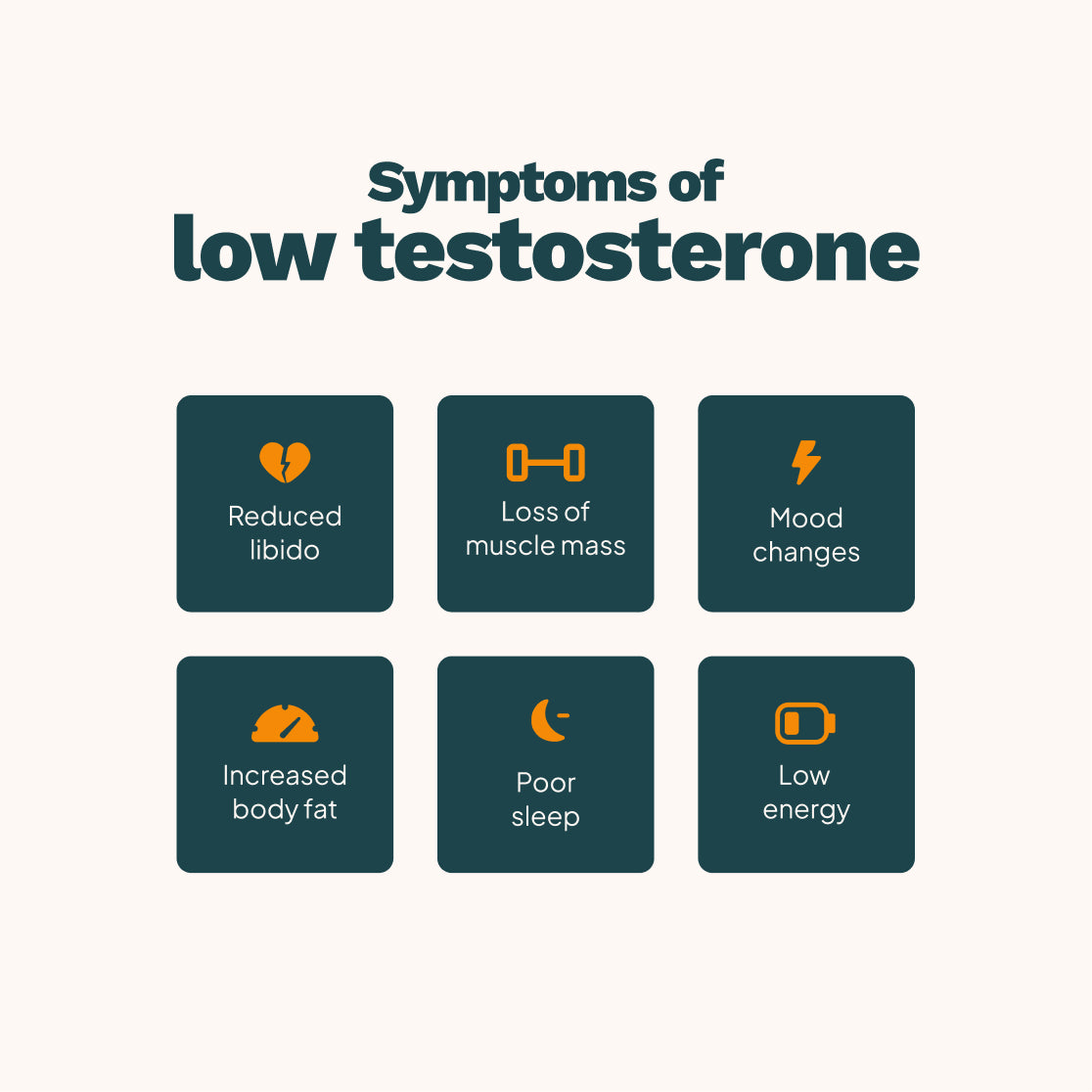
That can be especially relevant if you have symptoms such as:
- Low libido
- Fewer morning erections
- Erectile dysfunction
- Fatigue
- Brain fog
- Reduced motivation
- Poor gym recovery
- Increased body fat
Sexual symptoms are considered the most specific symptoms associated with low testosterone, or late-onset hypogonadism, but non-sexual symptoms still matter as part of the bigger picture.
Normal testosterone ranges
Normal testosterone ranges are not the same for every man, and they can vary with age, health, and the lab that processes the test. Testosterone also tends to fall gradually over time rather than dropping suddenly, with symptoms and lower levels becoming more common from midlife onwards.
The limits of reference ranges
Reference ranges are designed to show where most results in the general population sit, not necessarily where you personally feel your best. They also don't consider that two men can have the same total testosterone level but very different amounts of free testosterone, different SHBG levels, and very different symptoms.
Timing is important too, because testosterone levels are usually higher in the morning and fall as the day goes on.
So, if you have been told your testosterone is normal, it is worth considering:
- If the test measured only total testosterone?
- If the test was taken in the morning?
- If SHBG was checked?
- If free testosterone was calculated?
What is free testosterone?
Free testosterone is the small amount of testosterone in your bloodstream that isn't tightly bound to proteins and is more readily available for your body to use.
That matters because total testosterone can look normal on paper, even when free testosterone is lower than it should be. If SHBG levels are high or low, they can affect how much testosterone is actually available for your body to use, which is why checking SHBG and free testosterone can sometimes give a clearer picture.
What is SHBG?
SHBG stands for sex hormone-binding globulin. It's a carrier protein that binds testosterone in the bloodstream.
If SHBG is high, more testosterone gets tied up, which can leave less available as free testosterone. If SHBG is low, the reverse can happen.
Several things can affect SHBG levels, including:
- Age
- Smoking
- Thyroid problems
- Liver disease
- Certain medications
- Obesity
- Insulin resistance
- Type 2 diabetes
- Steroid use
So, SHBG can be an important part of the picture when symptoms don't seem to match a total testosterone result.
When should free testosterone be checked?
Free testosterone is most useful when the basic story doesn't quite add up.
That includes men who:
- Have clear symptoms but a “normal” total testosterone result
- Are older
- Have obesity or insulin resistance
- Have conditions that may affect SHBG
- Have borderline total testosterone results
Timing matters
A testosterone test taken at the wrong time can muddy the water.
Guidelines recommend measuring testosterone in the morning, ideally between 07:00 and 10:00. They also recommend repeating the test on at least two separate occasions when testosterone is low or borderline before making treatment decisions.
If your test was done later in the day or only once, that may be part of why the result does not seem to match how you feel.
What happens next if symptoms are still present?
If your symptoms indicate low testosterone, but the first result looks normal, the next step is usually to review the picture more closely.
That may include:
- Repeating a properly timed morning blood test
- Checking SHBG and calculated free testosterone
- Looking at LH and FSH to understand whether the issue is testicular, pituitary, or hypothalamic in origin
- Checking prolactin levels if low sexual desire or secondary hypogonadism is suspected
- Reviewing lifestyle factors, medications, weight, sleep, stress, and alcohol use
This is where symptoms stop being “just in your head” and start becoming useful clinical information.
Could it be something other than testosterone?
Several issues have symptoms that can overlap with low testosterone.
These symptoms include:
- Poor sleep
- Depression
- Anxiety
- Chronic stress
- Obesity
- Insulin resistance
- Medication side effects
- Thyroid problems
- Overtraining
Sometimes the result is not “your testosterone is fine, end of story”. Sometimes it is “your testosterone is one part of a wider picture”.
When to book a consultation
It is worth speaking to a specialist if:
- You have persistent symptoms despite a “normal” total testosterone result
- Your symptoms are affecting relationships, confidence, work, or training
- Your blood test did not include SHBG or free testosterone
- Your result was borderline or taken at the wrong time
- You want an expert view on whether further testing or treatment makes sense
Not sure where to start? Use our simple Get Started tool.
If you have normal testosterone but symptoms, you are not at a dead end.
A normal total testosterone result doesn't always rule out a hormone issue, especially if free testosterone has not been assessed, and SHBG may be affecting the picture. Symptoms still matter. Timing still matters. Context still matters. And in some men, that next layer of testing is exactly what explains why they do not feel right.
 References
- Bhasin, S., Brito, J.P., Cunningham, G.R., Hayes, F.J., Hodis, H.N., Matsumoto, A.M., Snyder, P.J., Swerdloff, R.S. and Wu, F.C.W. (2018) ‘Testosterone therapy in men with hypogonadism: an Endocrine Society clinical practice guideline’, The Journal of Clinical Endocrinology & Metabolism, 103(5), pp. 1715–1744. Available at: Endocrine Society.

Share:
Testosterone, oestradiol, and libido: understanding the relationship
Can low testosterone cause weight gain?