



A low sex drive is one of the most common reasons men start thinking about testosterone.
You might still feel attracted to your partner, but the urge just isn’t there. Or your erections may have changed too, making it hard to know whether the problem is desire, performance, confidence, or a bit of everything.
Testosterone can be part of the answer. But rarely is it the sole cause.
Oestradiol, a form of oestrogen, also matters in men. So do sleep, stress, mood, medication, alcohol, erections, general health and relationship factors. This article explains how testosterone and oestradiol affect libido, why 'more testosterone and less oestrogen' isn't always the answer, and what to consider if your sex drive is low or has not improved as expected on TRT.
Contents
- What is libido?
- How does testosterone affect sex drive?
- Can oestradiol affect libido and erections too?
- What causes abnormal oestradiol levels?
- What about prolactin?
- Does TRT improve libido and how long does it take?
- Why libido may still be low on TRT
- What blood tests can help?
What is libido?
Libido simply means your desire for sex.
It’s about wanting sex, thinking about sex, and responding to sexual cues. It’s different from what your body can physically do. You can have a strong sex drive but struggle with erections. On the flip side, you can have physically normal erections but very little interest in sex.
In real life, the two often overlap. If erections become unreliable, confidence can drop. Sex can start to feel pressured rather than enjoyable. Over time, that pressure can affect desire too.
The psychology of libido
Libido is also shaped by what is happening around you and within you. Stress, low mood, anxiety, burnout, grief, poor sleep, body confidence, relationship strain, and past sexual experiences can all affect how much desire you feel [1]. This is why two men with similar testosterone levels can feel very different.
That does not mean low libido is all in your head. It means sex drive sits at the intersection of body, brain, and context. Hormones matter, but they're rarely the whole story.
Low libido and erectile dysfunction are still different problems. They may need different checks, different treatment, or a slightly different conversation with your clinician.
If erections are part of the issue, our article on erectile dysfunction for more information and treatment options. Alternatively, if you're struggling with relationship dynamics or feel stuck in your head when it comes to sex, we can refer you to a psychosexual counsellor – just get in touch with us.
How does testosterone affect sex drive?
Sexual desire starts in the brain. Your brain has to register sexual cues and turn them into interest, anticipation, and arousal. Those cues might include touch, attraction, closeness, thoughts, visual cues or the expectation of sex.
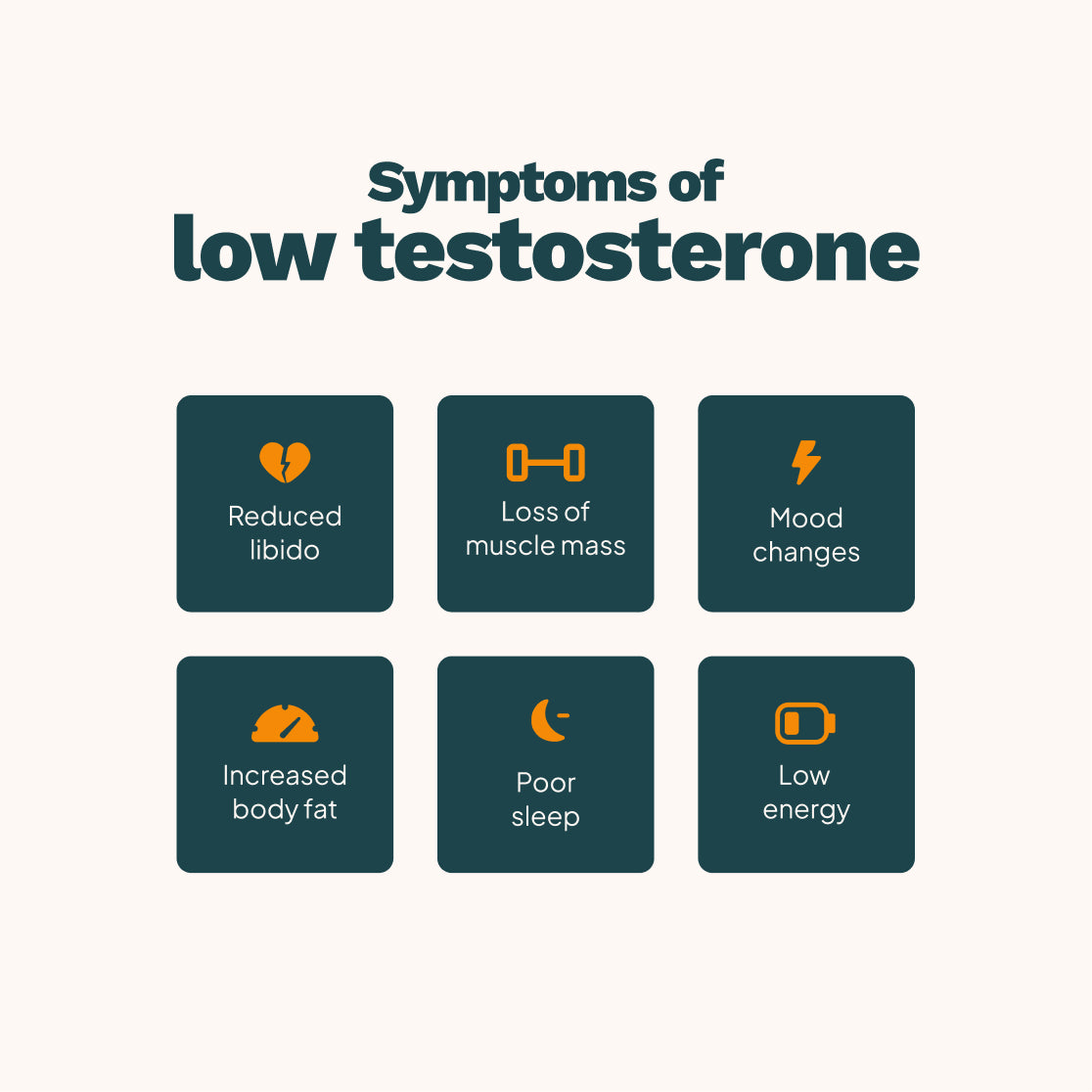
Testosterone helps set the tone for this system. When testosterone is low, sexual cues may feel weaker. Sex may still matter to you, but the physical urge can feel less intense or harder to access.
For some men, low testosterone also affects libido indirectly. It can leave them feeling tired, flat, less motivated, less physically confident or less like themselves. Morning erections may become less frequent. Training may feel harder. Mood can dip. Sleep may be poor, although poor sleep can also lower testosterone, so the relationship often runs both ways.
Over time, these changes can chip away at desire. If you feel exhausted, low in confidence, disconnected from your body or worried that sex will not go well, it's harder for libido to show up naturally. This is one reason low testosterone can feel like more than just a change in sex drive. It can affect the background conditions that make sex feel appealing in the first place.
That said, testosterone is not the only hormone involved in libido. Oestradiol and prolactin also matter.

Can oestradiol affect libido and erections too?
A lot of online advice makes oestrogen sound like the enemy. But that’s a little too simplistic.
Men naturally produce oestradiol. In fact, some testosterone is converted into oestradiol by an enzyme called aromatase. This is normal and necessary; oestradiol has many important functions.
Role of oestradiol in men [2]:
- Stimulates areas in the brain linked to sexual arousal
- Involved in sperm production
- Plays a role in maintaining healthy erections
- Regulates mood
- Contributes to bone health
Fatty tissue contains aromatase, which is why being overweight can often lead to higher levels of oestrogen in men.
Both a low or high oestradiol can negatively impact your sex drive and erections [2].
For men on TRT, oestradiol monitoring is crucial. When testosterone rises, oestradiol often rises too. That does not automatically mean something has gone wrong. It usually means some testosterone is being converted into oestradiol, as expected. But this isn’t always a sign that something needs changing – it mainly depends on your symptoms.
Generally, we allow a slightly higher oestradiol level when on TRT. As long as it’s not causing side effects, this is preferable to introducing additional medications to try and lower it. However, for some men, medications like aromatase inhibitors are necessary.
Find out more about managing oestradiol levels on TRT.
What causes abnormal oestradiol levels?
If your oestradiol level is abnormal, there are several possible causes for this.
Causes of low oestradiol in men:
- Hypogonadism – this condition causes the testicles to produce insufficient levels of testosterone, leaving less for conversion to oestrogen
- Overuse of aromatase inhibitors – these medications specifically block the conversion of testosterone to oestrogen
- Extreme lifestyle factors – severe malnutrition, eating disorders, overtraining, or very low body fat
Causes of high oestradiol in men:
- Obesity and body fat – fat tissue is rich in the aromatase enzyme that converts testosterone to oestrogen
- Liver disease – the liver is responsible for metabolising and clearing excess hormones in the bloodstream
- TRT – taking high doses of testosterone provides more raw materials for the body to convert to oestrogen
- Aging – aromatase activity can increase with age
What about prolactin?
Prolactin is a hormone made by the pituitary gland in the brain. It’s best known for its role in breast milk production, but men have prolactin too.
When prolactin is too high, it can interfere with the hormones that tell the testicles to produce testosterone. This can reduce libido, affect erections and contribute to fertility problems [3].
Prolactin can be raised for several reasons. Sometimes it is temporary, such as after poor sleep, stress, sex, exercise or illness. It can also be linked to certain medications, an underactive thyroid, kidney problems, or a benign pituitary growth called a prolactinoma.
A single mildly raised result is often nothing to worry about, but your clinician may advise repeating it. If prolactin is persistently or significantly raised, especially with headaches, visual symptoms, erectile problems, infertility or low testosterone, you should see your doctor for further assessment.
Does TRT improve libido and how long does it take?
TRT can improve libido in men with confirmed testosterone deficiency and symptoms [4,5].
Some men notice their sex drive improves within a few weeks. Erections often take longer, sometimes several months, especially if blood flow, confidence or erectile dysfunction are also part of the picture [6].
But TRT isn’t a magic switch.
A good response depends on several things, including how low your testosterone was before treatment, whether your symptoms fitted testosterone deficiency, your free testosterone, SHBG, oestradiol, dose, treatment type and wider health.
So, if libido stays low on TRT, it doesn’t automatically mean your dose is too low. It may mean something else is still affecting desire.
For a more detailed timeline, see our guide on how long TRT takes to work.
Why libido may still be low on TRT
If your sex drive is still low on TRT, there are several possible explanations beyond your hormone levels.
Reasons for low libido while on TRT:
- Stress
- Poor sleep
- Low mood
- High alcohol intake
- Medications
- Poor heart health
- Weight
- Relationship factors
- Raised prolactin level
Therefore, it’s something that requires a proper review, rather than guesswork. If you’re still struggling, speak to your TRT prescriber who can help.
Sometimes, the answer is a treatment adjustment, but often it’s a more holistic look at your lifestyle, relationship, and overall health.
What blood tests can help?
If your libido has changed, useful blood markers include:
- Total testosterone
- Calculated free testosterone
- SHBG
- Oestradiol
- Prolactin
- LH and FSH
- Thyroid function
- HbA1c
- Lipids
At Leger, the first step is usually to check your testosterone levels properly. If your results suggest low testosterone, further testing and clinical review can help decide whether TRT is appropriate. Our TRT Confirmation Blood Test measures the above markers for a clearer picture of what's going on.
If you are already on TRT, blood tests can help assess whether your dose, hormone balance and safety markers are where they need to be.
The key takeaway
Libido is complex.
Testosterone matters, and TRT can improve sex drive in men with confirmed testosterone deficiency. But libido is also affected by oestradiol, free testosterone, SHBG, prolactin, thyroid function, erections, sleep, stress, mood, medication, alcohol, relationship factors, and wider health.
If your libido is low, or it has not improved as expected on TRT, speak to your clinician. A proper review beats adjusting hormones by guesswork.
FAQs
Can you have low libido with normal testosterone?
Yes. Many men with normal testosterone still experience low libido. Oestradiol, prolactin, thyroid function, mood, sleep, medication, alcohol, relationship factors, erectile dysfunction and wider health can all play a role.
What oestradiol level is too high on TRT?
There is no single cut-off that applies to every man. Some men feel well with oestradiol above the standard reference range, while others develop symptoms at lower levels. The result needs to be interpreted alongside symptoms, other blood markers, dose, treatment type, and timing of the blood test.
Can low oestrogen cause low libido in men?
Yes. Very low oestradiol can affect libido, erections, mood, joints and bone health. Men need some oestradiol for normal sexual function, which is why aggressively lowering it can backfire.
Should I take an aromatase inhibitor on TRT?
Only if advised by a clinician after proper blood testing and review. Aromatase inhibitors lower oestradiol, but lowering it too far may cause new problems, including lower libido, mood changes and joint discomfort.
Could raised prolactin be causing my low libido?
It can. High prolactin is a recognised cause of low sex drive and erectile difficulties. It is worth checking if libido is low and testosterone and oestradiol do not explain the symptoms.
References
- Low sex drive (loss of libido). NHS [Internet]. 19 Oct 2017 [cited 15 June 2026]. Available: https://www.nhs.uk/symptoms/loss-of-libido/
- Schulster M, Bernie AM, Ramasamy R. The role of estradiol in male reproductive function. Asian J Androl. 2016;18: 435–440. doi:10.4103/1008-682X.173932
- Buvat J. Hyperprolactinemia and sexual function in men: a short review. Int J Impot Res. 2003;15: 373–377. doi:10.1038/sj.ijir.3901043
- Bhasin S, Brito JP, Cunningham GR, Hayes FJ, Hodis HN, Matsumoto AM, et al. Testosterone Therapy in Men With Hypogonadism: An Endocrine Society Clinical Practice Guideline. J Clin Endocrinol Metab. 2018;103(5):1715–1744. doi:10.1210/jc.2018-00229
- Cunningham GR, Stephens-Shields AJ, Rosen RC, Wang C, Bhasin S, Matsumoto AM, et al. Testosterone Treatment and Sexual Function in Older Men with Low Testosterone Levels. J Clin Endocrinol Metab. 2016;101(8):3096–3104. doi:10.1210/jc.2016-1645
- Saad F, Aversa A, Isidori AM, Zafalon L, Zitzmann M, Gooren L. Onset of effects of testosterone treatment and time span until maximum effects are achieved. Eur J Endocrinol. 2011;165: 675–685. doi:10.1530/EJE-11-0221

Share:
Testosterone pills: do they work and are they safe?
Normal testosterone, but all the symptoms – what happens next?