



Men with obesity are more likely to have reduced testosterone levels, while testosterone deficiency can contribute to increased body fat and changes in body composition. This relationship is complex, and understanding which is driving the problem is important when considering testing and treatment.
In this article, we’ll examine the relationship between obesity and testosterone, how excess body fat can affect hormone production, and whether TRT has a role to play.
- Low testosterone and weight gain: why are they connected?
- How can obesity lower testosterone?
- Can low testosterone cause weight gain?
- Why belly fat matters for men’s health
- What symptoms should overweight men look out for?
- Can weight loss increase testosterone?
- Does TRT help with weight loss?
- What about GLP-1 weight loss injections?
- When should you seek advice?
Low testosterone and weight gain: why are they connected?
Obesity is one of the most common causes of reduced testosterone levels in men.
Body fat isn’t just stored energy. It’s active tissue that can influence inflammation, insulin resistance, oestrogen levels, and the hormone signals between the brain and testicles that help control testosterone production [1].
This is especially relevant when it comes to visceral fat, which is the fat stored around the organs. Higher levels of visceral fat are linked with poorer metabolic health, including insulin resistance, type 2 diabetes, and cardiovascular risk. These same issues are also commonly seen alongside lower testosterone levels.
So, when we talk about the connection between testosterone and obesity, it’s not just about weight. It’s about the wider metabolic environment that can affect how the body produces, carries, and uses hormones.
How can obesity lower testosterone?
There are a few ways obesity can affect testosterone.
Brain-testicle signalling
Testosterone production is regulated through the hypothalamic-pituitary-testicular axis. Hormonal signals from the brain stimulate the testicles to produce testosterone.
Obesity-related inflammation, insulin resistance, and metabolic dysfunction can disrupt the signalling pathway, contributing to a form of testosterone deficiency often referred to as obesity-related secondary hypogonadism [1].
Oestrogen
Body fat can also affect the balance between testosterone and oestrogen. Men naturally make some oestrogen, and that’s completely normal. But fat tissue contains an enzyme called aromatase, which helps convert testosterone into oestrogen.
As body fat increases, aromatase activity may increase, altering the balance between testosterone and oestrogen. This can contribute to lower circulating testosterone levels in some men.
Sex hormone-binding globulin (SHBG)
Sex hormone-binding globulin (SHBG) is a protein that transports testosterone in the bloodstream.
Obesity, insulin resistance, type 2 diabetes, and fatty liver disease can all reduce SHBG levels, affecting total testosterone levels and making results more complicated to interpret.
Testosterone results should never be interpreted in isolation. SHBG, free testosterone, symptoms, and wider metabolic health all need to be considered.
Can low testosterone cause weight gain?
Low testosterone doesn’t directly cause weight gain, but it can contribute to changes in body composition and make weight management feel harder.
Testosterone is involved in energy, motivation, sexual function, mood, and body composition. When levels are low, some men find they feel flatter, less active, more tired, or less able to maintain healthy habits. Others notice increased belly fat, reduced strength, slower recovery, or a general sense that their bodies aren’t responding as they used to.
This can create a frustrating cycle. Weight gain may contribute to lower testosterone levels, while low testosterone symptoms may make it harder to lose weight, stay active, and maintain a healthy routine.

Why belly fat matters for men’s health
Excess abdominal fat is strongly associated with metabolic dysfunction and lower testosterone levels.
Higher levels of visceral fat are linked with insulin resistance, type 2 diabetes, fatty liver disease, high blood pressure, and changes in cholesterol levels. Many of these conditions are also seen in men with low testosterone.
For this reason, increased waist circumference can be an important clinical marker when assessing hormonal and metabolic health.
What symptoms should overweight men look out for?
Being overweight doesn’t mean you have low testosterone. And having symptoms doesn’t automatically mean testosterone is the cause. Stress, sleep problems, alcohol, medication, diabetes, thyroid issues, low mood, and other health conditions can all cause similar symptoms.
But if you’re carrying excess weight and notice symptoms that aren’t improving, it may be worth seeking advice.
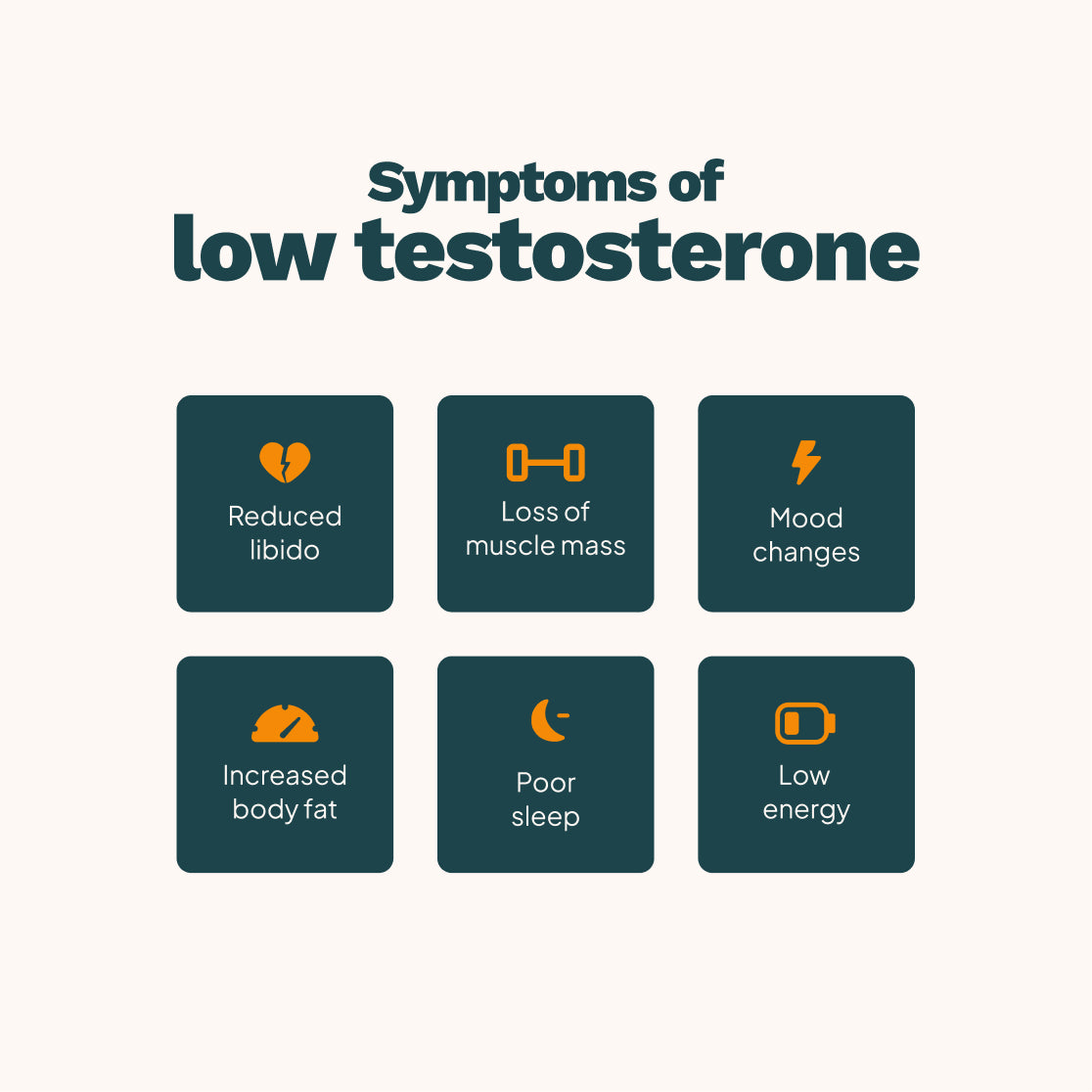
Symptoms that can be linked with low testosterone include:
- Low sex drive
- Ongoing tiredness
- Low mood
- Poor motivation
- Increased belly fat
These symptoms don’t confirm low testosterone on their own. A diagnosis should be based on symptoms and consistently low testosterone levels on properly timed blood tests.
Learn more about low testosterone symptoms here.
Can weight loss increase testosterone?
Weight loss can improve testosterone levels, particularly when obesity is the primary cause of reduced testosterone production.
Research has shown that improvements in body weight, insulin sensitivity, physical activity, and overall metabolic health can lead to meaningful increases in testosterone levels in some men. Even small changes to diet, activity, sleep, and overall health can sometimes make a difference.
Does TRT help with weight loss?
Testosterone replacement therapy (TRT) is prescribed for men with symptoms of testosterone deficiency and consistently low testosterone levels confirmed through blood testing.
Although some men notice improvements in body composition during treatment, TRT is not a weight-loss treatment, and it shouldn’t be prescribed for weight reduction.
The aim of TRT is to restore testosterone levels and improve symptoms associated with testosterone deficiency.
What about GLP-1 weight loss injections?
For some men, weight loss medication may also be part of the conversation, especially when obesity is affecting metabolic health, confidence, mobility, or quality of life.
GLP-1 receptor agonists are licensed weight-management treatments that reduce appetite and support weight loss when used alongside lifestyle changes. They’re not suitable for everyone and are prescribed under proper medical oversight.
For some men, addressing obesity may improve testosterone levels without the need for testosterone treatment. For others, obesity and testosterone deficiency may require separate assessment and management.
You can read more in our GLP-1 weight loss guide.
When should you seek advice?
Assessment may be appropriate if you have symptoms of testosterone deficiency alongside obesity, increased abdominal fat, or concerns about your metabolic health.
It’s also sensible to get advice if you’ve already had a testosterone blood test, but the result doesn’t seem to match how you feel. Timing, repeat testing, SHBG, free testosterone, and wider health markers can all affect how results are interpreted.
At Leger, assessment focuses on understanding the underlying cause of symptoms before treatment is considered. For some men, weight loss and metabolic improvements may be sufficient to improve testosterone levels. For others, persistent symptoms and consistently low testosterone may indicate testosterone deficiency requiring further investigation and treatment.
The first step is establishing an accurate diagnosis before deciding whether TRT weight-management support, GLP-1 treatment, or another approach is most appropriate.
Not sure where to start? Use our simple Get Started tool.
References
- Fernandez, C.J., Chacko, E.C. and Pappachan, J.M. (2019) ‘Male obesity-related secondary hypogonadism – pathophysiology, clinical implications and management’, European Endocrinology, 15(2), pp. 83–90. doi: 10.17925/EE.2019.15.2.83.

Share:
Normal testosterone, but all the symptoms – what happens next?
What happens to your testicles on TRT?