

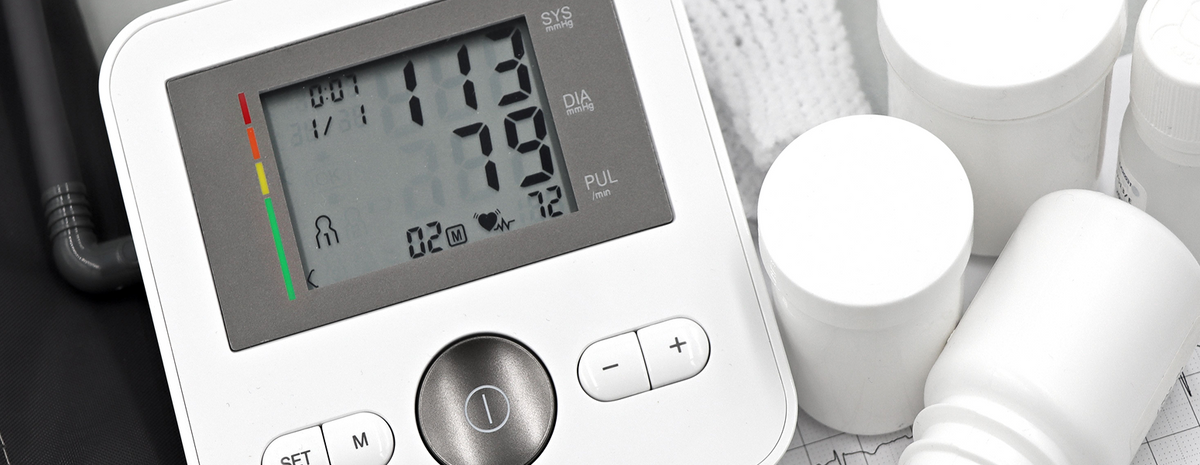

High blood pressure often has no noticeable symptoms, so you may not know you have it without having your blood pressure checked. You might not have a headache, racing pulse, or obvious warning that anything is wrong. Yet around one in three UK adults have high blood pressure, and up to five million people may be living with it without knowing [1].
Weight is one of several factors that can affect blood pressure. If you're carrying excess weight, losing some of it may help lower your blood pressure and support your overall heart health.
This article explains how weight affects blood pressure, what losing weight may change, and how to protect your overall heart health.
- What does blood pressure actually measure?
- What counts as high blood pressure in the UK?
- Why does persistent high blood pressure matter?
- Why can excess weight raise blood pressure?
- How much can losing weight lower blood pressure?
- You don’t have to become slim to benefit
- Why your waist matters as well as your weight
- Blood pressure is only one part of heart risk
- Practical ways to lose weight and support healthier blood pressure
- How should you track progress?
- Can weight loss medication help?
- Why medication may need reviewing as you lose weight
What does blood pressure actually measure?
Blood pressure is the force of blood pushing against the walls of your arteries. It rises and falls naturally as your heart beats, which is why a reading contains two numbers:
- Systolic pressure is the first, higher number. It records the pressure when the heart contracts and pumps blood out.
- Diastolic pressure is the second, lower number. It records the pressure while the heart relaxes between beats.
A reading of 130/80 mmHg, for example, is usually said as '130 over 80'. The unit mmHg stands for millimetres of mercury, a reminder of the mercury columns once used in blood pressure equipment.
What counts as high blood pressure in the UK?
The NHS usually considers blood pressure high at 140/90 mmHg or above when it's measured by a healthcare professional, or 135/85 mmHg or above when the average is taken at home [2]. The threshold is slightly lower at home because blood pressure readings tend to be lower outside a clinical setting.
One unusually high result doesn't automatically mean you have hypertension – the medical term for blood pressure that remains consistently too high. NICE recommends repeat clinic measurements and, where appropriate, home or 24-hour monitoring to confirm the diagnosis [3].
Blood pressure isn't fixed and can rise after exercise, caffeine, stress, pain, or a poor night's sleep. Clinicians are interested in whether it remains too high over time, including when you're at rest.
Why does persistent high blood pressure matter?
Hypertension may not affect how you feel today, but it can place increasing strain on your arteries and organs over time. Untreated elevated blood pressure can damage the lining of blood vessels, stiffen them, and make the heart work harder. Over time, this increases the risk of heart attack, stroke, heart failure, kidney disease, damage to the eyes, and vascular dementia [2].
Small changes in blood pressure can still be important. An individual-participant analysis of 48 randomised blood-pressure-lowering trials found that a 5 mmHg reduction in systolic pressure lowered the risk of a major cardiovascular event by about 10%, regardless of whether participants already had cardiovascular disease [4]
Why can excess weight raise blood pressure?
Obesity and high blood pressure are often linked, particularly when fat is stored around the abdomen. A recent review estimated that obesity, especially visceral obesity, is associated with a 65% to 75% higher risk of primary hypertension [5].
It’s not simply that the heart has to pump blood around a larger body, as several different systems contribute.
- The heart may need to move more blood: As body mass increases, blood volume and cardiac output can rise, placing more work on the heart.
- The kidneys may retain more salt and water: Fat around and within the kidneys can contribute to physical pressure, while hormonal systems that regulate fluid balance may become overactive. The result can be an increase in blood volume.
- The nervous system can stay more switched on: Obesity can increase activity in the sympathetic nervous system, which affects heart rate, blood-vessel tone, and the amount of sodium the kidneys retain.
- Blood vessels may not relax as easily. Insulin resistance, inflammation, and changes in signals released by fat tissue can affect the lining and function of the blood vessels, increasing vascular resistance.
- Sleep apnoea can add another layer. Obstructive sleep apnoea is more common in people living with obesity. Repeated drops in oxygen and broken sleep can trigger surges in sympathetic activity and blood pressure, particularly overnight.
If you snore loudly, have intermittent breathing during sleep, wake with headaches, or feel unusually tired during the day, speak to your GP.
How much can losing weight lower blood pressure?
There isn't a guaranteed figure because your starting blood pressure, age, genetics, medication, salt and alcohol intake, sleep, and the amount of weight lost all make a difference. However, research provides a useful average.
An analysis of 25 randomised controlled trials involving 4,874 participants found that an average weight loss of 5.1 kg reduced systolic blood pressure by 4.44 mmHg and diastolic blood pressure by 3.57 mmHg. Expressed per kilogram, the average reductions were around 1.05 mmHg systolic and 0.92 mmHg diastolic [6].
Start your weight loss journey with Leger.
You don’t have to become slim to benefit
Health improvement isn't reserved for the point at which someone reaches a particular clothing size or BMI. A realistic, sustained reduction in weight can ease some of the biological pressures. It may also make walking easier, improve sleep, reduce insulin resistance, and help you exercise more regularly.
Crash diets are rarely the answer, and a dramatic loss followed by a regain is less useful than a smaller change you can maintain. The aim is to improve health and reduce risk, not to chase the lowest possible number on the scales.
Why your waist matters as well as your weight
Two men can have the same weight or BMI and carry it very differently. One may have more fat beneath the skin, while the other stores more around the abdominal organs. This visceral fat is closely linked to insulin resistance, abnormal blood lipid levels, and high blood pressure.
Research in 2020 concluded that waist circumference provides useful information about cardiometabolic risk beyond BMI alone [7]. If your weight changes slowly but your waist is getting smaller, that can still be encouraging, particularly if you're exercising and preserving muscle.
Blood pressure is only one part of heart risk
Getting your blood pressure down is valuable, but it doesn't eliminate all other cardiovascular risks. A fuller assessment may consider:
- Waist size and overall body composition, because abdominal fat can add risk that BMI may miss.
- Cholesterol and triglycerides, including the balance between atherogenic and protective lipoproteins.
- Blood glucose and HbA1c, which help identify diabetes or increased metabolic risk.
- Smoking, alcohol, physical activity, and diet, because these can affect risk independently of body weight.
- Age, ethnicity, kidney health, and family history, which cannot be changed but still influence the overall picture.
For people with hypertension, assessment may also include evaluation of kidney function, electrolytes, urinalysis, and an ECG.
Practical ways to lose weight and support healthier blood pressure
You don't need to overhaul everything at once. Pick the changes that address your biggest risks and that are sustainable.
- Create a modest, sustainable calorie deficit: Meals based around protein, vegetables or fruit, higher-fibre carbohydrates, and unsaturated fats tend to be more filling than highly processed options. Portion size and drinks still matter, even when the food itself is nutritious.
- Look at salt, not just calories: Adults should have no more than 6g of salt a day. Much of it is already present in bread, cereals, processed meats, ready meals, sauces, takeaways, and restaurant food, so consider this when calculating your daily intake.
- Build up regular movement: The NHS recommends at least 150 minutes of moderate activity a week, or 75 minutes of vigorous activity, alongside muscle-strengthening work on at least two days. Brisk walking counts, and short sessions can be easier to fit around work [8].
- Keep an eye on alcohol: Alcohol contains calories, can make food choices less deliberate, and may raise blood pressure when intake is high. The NHS advises staying within 14 units a week on a regular basis.
- Stop smoking: Smoking may not be the cause of your weight, but it raises cardiovascular risk substantially. Support from a GP, pharmacy, or stop-smoking service can make quitting more manageable.
- Take sleep seriously: Treating possible sleep apnoea and improving sleep routines may help with energy, appetite, activity, and blood pressure control.
How should you track progress?
The scales are useful, but they aren't the whole report. Consider tracking your waist measurements every two to four weeks, home blood pressure readings if your clinician has advised them, fitness, strength, sleep, and relevant blood test results. Take blood pressure measurements in the same way each time and look at the average rather than reacting to a single reading.
Can weight loss medication help?
For some men, weight loss medication can make sustained weight loss more achievable. However, whether it's suitable for you depends on factors such as BMI, weight-related health conditions, current medications, and the risk of side effects. Weight loss treatment should be used alongside a reduced calorie diet and increased physical activity, with appropriate assessment and follow-up.
Some weight loss medications may also help lower blood pressure. A review of 85 trials found that GLP-1 medicines reduced systolic blood pressure readings by an average of 3.4 mmHg and diastolic pressure by 0.9 mmHg. Dual-action medicines, including tirzepatide (Mounjaro), produced larger average reductions of 5.1 mmHg and 1.8 mmHg. In general, greater weight loss was associated with a greater improvement, although these medicines don’t replace blood pressure treatment or regular monitoring [9].
Start your weight loss journey with Leger by completing this brief assessment.
Why medication may need reviewing as you lose weight
Blood pressure can fall as weight, food choices, activity, alcohol intake, and sleep improve. If you start feeling dizzy, faint, unusually weak, or light-headed when standing, contact the clinician who manages your medication and share your recent readings.
Some blood pressure medicines can cause problems if they're stopped suddenly, while stopping treatment too early can allow hypertension to return.

References
- British Heart Foundation (n/d) High blood pressure: how research is uncovering causes and treatments. (Accessed: 1 September 2026).
- NHS (2024) High blood pressure. (Accessed: 1 September 2026).
- National Institute for Health and Care Excellence (2026) Hypertension in adults: diagnosis and management. NICE guideline NG136. (Accessed: 1 September 2026).
- Blood Pressure Lowering Treatment Trialists' Collaboration (2021) Pharmacological blood pressure lowering for primary and secondary prevention of cardiovascular disease across different levels of blood pressure: an individual participant-level data meta-analysis. The Lancet, 397(10285), pp. 1625–1636.
- Parvanova, A., Reseghetti, E., Abbate, M. and Ruggenenti, P. (2024) Mechanisms and treatment of obesity-related hypertension—Part 1: Mechanisms. Clinical Kidney Journal, 17(1), sfad282.
- Neter, J.E., Stam, B.E., Kok, F.J., Grobbee, D.E. and Geleijnse, J.M. (2003) Influence of weight reduction on blood pressure: a meta-analysis of randomised controlled trials. Hypertension, 42(5), pp. 878–884.
- Ross, R., Neeland, I.J., Yamashita, S., Shai, I., Seidell, J., Magni, P., Santos, R.D., Arsenault, B., Cuevas, A., Hu, F.B., Griffin, B.A., Zambon, A., Barter, P., Fruchart, J.-C., Eckel, R.H., Matsuzawa, Y. and Després, J.-P. (2020) Waist circumference as a vital sign in clinical practice: a Consensus Statement from the IAS and ICCR Working Group on Visceral Obesity. Nature Reviews Endocrinology, 16(3), pp. 177–189.
- NHS (2026) Physical activity guidelines for adults aged 19 to 64. (Accessed: 2 September 2026).
- Basile, C., Merolla, A., Mancusi, C., De Luca, C., Fucile, I., Canonico, M.E., Giugliano, G., Orso, F., Morisco, C. and Esposito, G. (2026) Effect of incretin-based therapies on blood pressure: a systematic review and meta-analysis. European Journal of Preventive Cardiology, 33(7), pp.

Share:
TRT blood tests explained: what your results really mean
What really motivates men to lose weight?