



Concerns about sexual health are common — and for many men, they’re also the first sign that something doesn’t feel quite right. So, if you’re struggling with these issues, you’re not alone, and there are solutions.
A lower sex drive, changes in erections, or reduced confidence are worrying, but they are influenced by a wide range of physical, psychological, and lifestyle factors.
Testosterone plays an important role in male sexual health, but it’s rarely the only factor involved. Understanding how testosterone fits into the bigger picture can help men make informed decisions about testing, treatment, and support.
- How testosterone influences sexual health
- Low testosterone and sexual health
- Could low testosterone be contributing to poor sexual health?
- Could sexual symptoms be due to other factors?
- Why men notice sexual symptoms first
- What testosterone testing can — and can’t, tell you
- Why your treatment decisions should be clinical, not DIY
How testosterone influences sexual health
Testosterone is involved in several aspects of male sexual function, particularly desire, or libido, arousal, and overall energy levels. Normal testosterone levels support an interest in sex, sexual thoughts, and responsiveness to stimulation [1].
When testosterone levels fall below the normal range, some men may notice:
- Reduced sexual desire
- Fewer sexual thoughts
- Lower energy or motivation
These changes are often gradual and overlap with other symptoms such as fatigue, low mood, or reduced physical performance [2].
Low testosterone and sexual health
Your sexual health isn’t dependent on one single process, and it’s helpful to separate three commonly confused areas.
1. Low libido
Libido describes your level of sex drive or interest. Low testosterone and libido changes are commonly associated, as reduced sexual desire is one of the symptoms most frequently linked to low testosterone.
However, it’s important to remember that stress, poor sleep, low mood, and relationship dynamics can also have a significant influence on your libido.
2. Erectile dysfunction
Erectile dysfunction (ED) refers to difficulty achieving or maintaining an erection. Although testosterone and erections are often discussed together, erectile function relies heavily on healthy blood flow, nerve signalling, and heart health.
ED is more commonly associated with cardiovascular health, diabetes, smoking, and certain medications than with testosterone alone [3].
3. Changes in confidence or performance
Worrying about sexual performance, reduced confidence, or feelings of anxiety can develop alongside physical changes — or sometimes before them.
These concerns are frequently influenced by stress, mental health, and previous sexual experiences rather than just hormones.
Read our guide low testosterone symptoms to find out more.
Could low testosterone be contributing to poor sexual health?
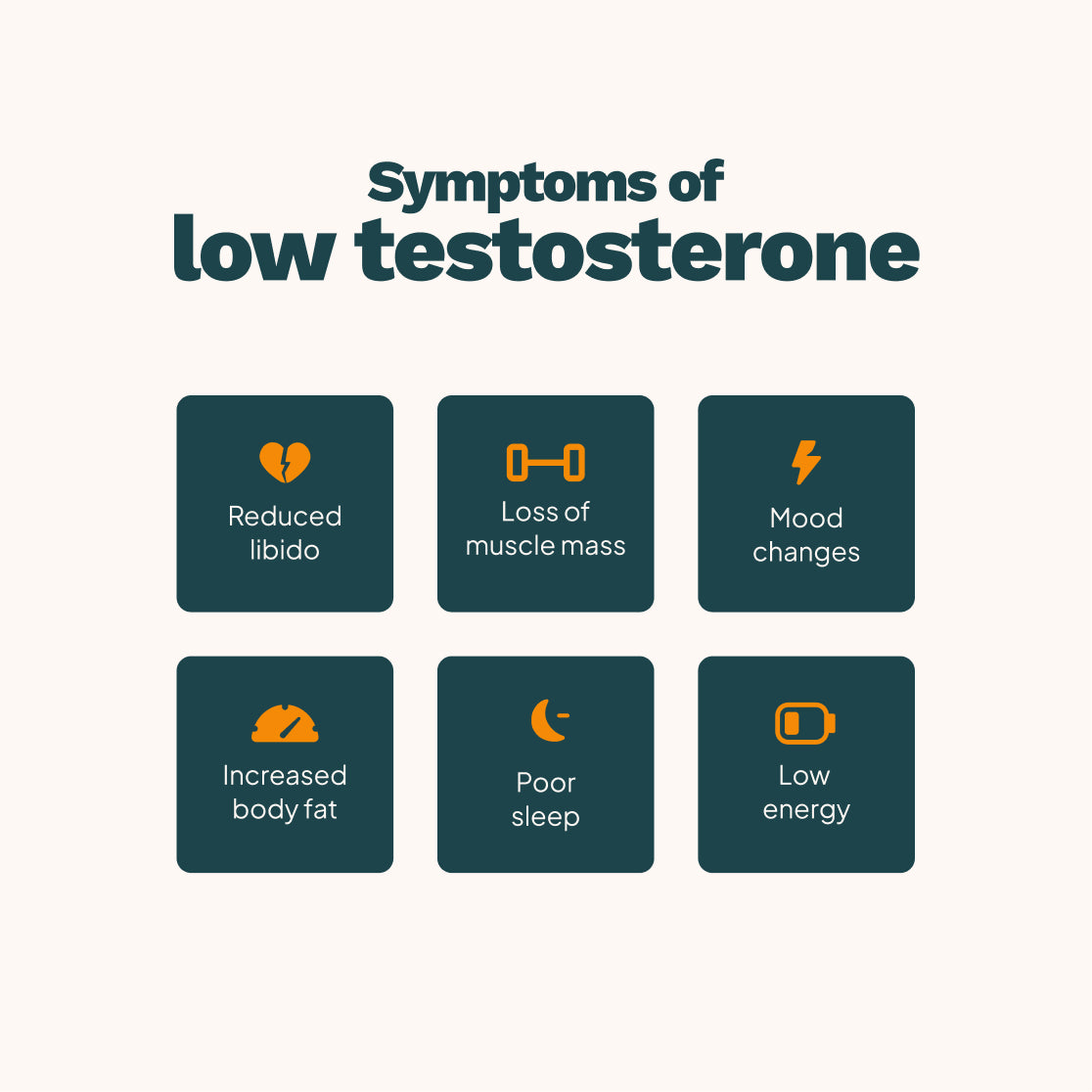
Low testosterone is more likely to be a contributing factor when sexual symptoms occur alongside other features of testosterone deficiency, such as:
- Persistent fatigue
- Loss of muscle mass or strength
- Increased body fat
- Low mood or reduced motivation
The only way to know whether low testosterone could be contributing to poor sexual health is by taking a Testosterone Blood Test to check your testosterone levels.

Could sexual symptoms be due to other factors?
While testosterone can relate to male sexual health, many men experiencing erectile difficulties or changes in sexual satisfaction have normal testosterone levels.
Sexual function is also influenced by heart health, neurological issues, including sleep, psychological wellbeing, and lifestyle factors, so these should be considered if you’re experiencing poor sexual health.
1. Cardiovascular health
Healthy blood flow is particularly important for erectile function. Conditions that affect your cardiovascular system, such as high blood pressure, atherosclerosis, insulin resistance, and type 2 diabetes, are among the most common causes for erectile difficulties [3]. In some cases, you might notice erectile changes before a diagnosis of underlying cardiovascular disease.
2. Sleep
Hormone regulation can be negatively impacted by poor sleep. It can also affect energy levels and sexual health, being strongly associated with reduced libido, fatigue, and metabolic changes.
3. Mental wellbeing
Psychological factors are an important consideration. Stress, anxiety, and depression can alter your sexual desire, interfere with arousal, and contribute to performance concerns. These effects are common, often reversible, and may occur with regular testosterone levels.
4. Lifestyle factors
Alcohol can affect sexual function in several ways, especially if you drink excessively. It often interferes with the nerve signals and circulatory changes needed for arousal and erections, and its longer-term effects can extend to sleep quality, energy levels, and hormone regulation. Together, these factors can influence your overall sexual wellbeing.
Commonly prescribed medications can influence your sexual function. Selective serotonin reuptake inhibitors (SSRIs), a type of antidepressant, have been linked to a decrease in libido or delayed orgasms [4]. Some blood pressure medication may also contribute to erectile difficulties.
These effects vary considerably between individuals and medications, and many men experience no changes at all.
For these reasons, if you experience persistent sexual symptoms it’s a good idea to consider them in a broader health context.
Why men notice sexual symptoms first
Changes in sexual health are often one of the earliest signs that men become aware of when something feels “off.” This is entirely understandable, your sexual function is closely tied to your physical wellbeing, energy levels, and confidence, making even subtle changes more noticeable.
Several factors help explain why you notice sexual symptoms first:
- Symptoms are more immediately obvious: Reduced desire or changes in your erections are easier to recognise than gradual shifts in your metabolism, mood, or body composition
- Psychological impact: Sexual changes often carry emotional weight, so you are naturally more likely to pay attention to them
Noticing sexual changes doesn’t automatically point to a hormone problem, but it can be a useful prompt to consider broader health factors if your symptoms persist.
What testosterone testing can tell you
A testosterone blood test can help determine whether your levels are within the normal range, but it doesn’t provide all the answers on its own.
Testing can:
- Identify low or borderline testosterone levels
- Help explain symptoms when results and clinical features align
Testing cannot:
- Diagnose the cause of erectile dysfunction in isolation
- Predict sexual performance
- Replace a full clinical assessment
Results should always be interpreted in context, taking into account your symptoms, the timing of the test, and overall health.
Learn more about how TRT can boost low testosterone with our TRT guide.
Why your treatment decisions should be clinical, not DIY
TRT can be beneficial for men with confirmed testosterone deficiency and relevant symptoms, but it is not a general treatment for sexual performance.
If you have normal testosterone levels, TRT is unlikely to improve erections and may carry unnecessary risks [5].
Looking after your sexual health often involves considering:
- Underlying medical conditions
- Lifestyle factors such as sleep, weight, and alcohol use
- Psychological wellbeing
- Relationship and stress-related factors
Any treatment should be appropriate and with a view to your long-term health. A clinical approach will ensure this, providing a comprehensive picture rather than focusing on hormones in isolation.
Low testosterone can influence sexual health, particularly libido and sexual interest. Erectile function, desire, and confidence are shaped by a complex interaction of hormones, physical health, and mental wellbeing.
If you want to find out whether low testosterone could be linked to your symptoms, then buying a Testosterone Blood Test is your first step.
Not sure where to start? Use our simple Get Started tool.
References
-
Corona, G., Rastrelli, G., Maseroli, E., Forti, G. and Maggi, M. (2014). Sexual function of the ageing male, Best Practice & Research Clinical Endocrinology & Metabolism.
2. Grossmann, M. (2011). Low Testosterone in Men with Type 2 Diabetes: Significance and Treatment. The Journal of Clinical Endocrinology & Metabolism.
3. Dean, R.C. and Lue, T.F. (2005). Physiology of penile erection and pathophysiology of erectile dysfunction. Urologic Clinics of North America.
4. Serretti, A. and Chiesa, A. (2009) Treatment-emergent sexual dysfunction related to antidepressants, Journal of Clinical Psychopharmacology.
5. Bhasin, S., Brito, J.P., Cunningham, G.R., Hayes, F.J., Hodis, H.N., Matsumoto, A.M., Snyder, P.J., Swerdloff, R.S. and Wu, F.C.W. (2018). Testosterone therapy in men with hypogonadism: an Endocrine Society clinical practice guideline. The Journal of Clinical Endocrinology & Metabolism.

Share:
Is male menopause (andropause) real?
What is testosterone and why it matters for men’s health