



Testosterone replacement therapy (TRT) is a prescribed medical treatment, so it isn’t available to everyone who feels tired, flat, or unlike themselves. For TRT eligibility, you need symptoms of low testosterone, supported by a medical assessment of your testosterone levels.
This article explains who may be eligible for TRT and covers symptoms and blood test results. It also explains what the assessment involves and when treatment may not be suitable.
Contents
- Who may be suitable for TRT?
- How do symptoms affect TRT eligibility?
- What testosterone levels are considered for TRT?
- How to prepare for a testosterone blood test
- What happens during a TRT assessment?
- When might TRT not be appropriate?
- What happens if TRT is suitable for you?
Who may be suitable for TRT?
TRT may be appropriate for adult men who have:
- Persistent symptoms associated with testosterone deficiency.
- Low testosterone on at least two separate blood tests.
- A medical assessment suggests that testosterone deficiency is the likely cause.
- No untreated health conditions that could make TRT unsafe.
- An understanding of the potential benefits, risks, limitations, and monitoring involved.
Testosterone deficiency can start in the testes, called primary hypogonadism. It can also occur when the pituitary gland or hypothalamus does not send the appropriate hormone signals – secondary hypogonadism.
For more information, read our guide to getting TRT in the UK.
Low testosterone can also be associated with:
- Obesity
- Certain medicines
- Chronic illness
- Previous testicular injury
- Pituitary disease
- Genetic conditions
- Cancer treatment
Identifying the cause is an important part of deciding whether TRT is the right low testosterone treatment.
How do symptoms affect TRT eligibility?
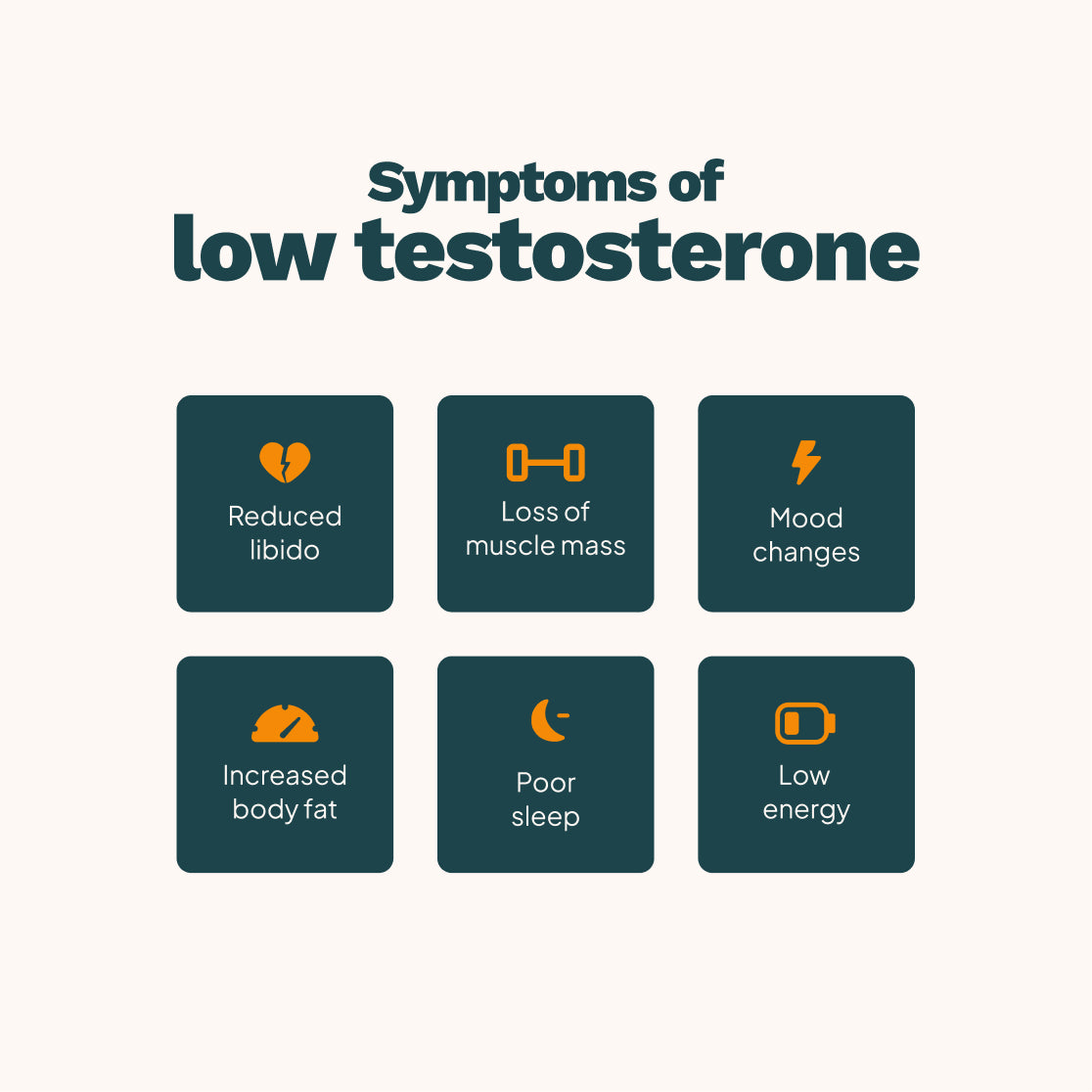
Symptoms form part of a TRT assessment, but they can’t confirm testosterone deficiency on their own. A clinician will consider the symptoms you are experiencing, how long they’ve lasted, and whether another condition or medication could explain them.
Sexual symptoms, including reduced libido, fewer morning erections, and erectile difficulties, have a stronger association with low testosterone than more general concerns such as fatigue, low mood, and poor concentration.
However, no single symptoms automatically make you eligible for treatment. TRT should be considered only when relevant symptoms are present, supported by appropriate blood test results and medical assessment.
Read our dedicated guide for a fuller explanation of the signs and symptoms of low testosterone.
What testosterone levels are considered for TRT?
There isn’t one universal testosterone level that automatically makes someone eligible for TRT. Laboratories use different testing methods and reference ranges, and results must be interpreted alongside symptoms and other hormones.
Current British Society for Sexual Medicine guidance provides the following broad framework [1]:
|
Total testosterone level |
What it may mean |
|
Below 8 nmol/L |
Usually supports treatment when compatible symptoms are present. |
|
8–12 nmol/L |
Borderline. Symptoms, SHBG, calculated free testosterone, age, health, and the likely cause should be considered. |
|
Above 12 nmol/L |
Testosterone deficiency is less likely, and TRT wouldn’t normally be recommended without further clinical evidence. |
When total testosterone is borderline, a calculated free testosterone result may provide more information. A free testosterone level below approximately 0.225 nmol/L can add support to the diagnosis, although it shouldn’t be considered in isolation.
Read our article on free testosterone vs total testosterone to find out more.
Testosterone levels change throughout the day and can be affected by food, sleep, illness, medication, and recent physical stress. This is why diagnosis usually requires two early-morning blood tests, taken on separate days.
How to prepare for a testosterone blood test
To help ensure reliable results, the British Society for Sexual Medicine recommends testing between 7am and 11am on at least two separate occasions [1].
Ideally, you should:
- Follow any fasting instructions provided by your clinician.
- Avoid testing while you’re acutely unwell.
- Tell your clinician about your medicines and supplements, but don’t stop taking anything unless advised.
- Use the same laboratory where practical, as testing methods and reference ranges can vary.
These steps reduce the risk of a temporary or misleading result affecting the assessment. A single low result should always be confirmed before treatment is considered.

What happens during a TRT assessment?
If you’re wondering how to get TRT in the UK, a responsible assessment will usually involve several stages.
-
Discussing your symptoms
Your clinician will ask what has changed, how long the symptoms have been present, and how they affect your relationships, work, wellbeing, and sex life. They may also ask about sleep, alcohol, exercise, weight, medication, previous illnesses, and testicular or head injuries.
-
Confirming your testosterone levels
You’ll normally need two separate morning testosterone results.
A second blood test should include:
- Sex hormone-binding globulin (SHBG) and albumin, used to calculate free testosterone
- Luteinising hormone (LH) and follicle-stimulating hormone (FSH)
- Prolactin
- Full blood count and haematocrit
- Thyroid, liver, and kidney tests
- HbA1c and cholesterol
- Prostate-specific antigen (PSA), where appropriate
What can LH and FSH reveal?
Testosterone results show whether levels are low, while LH and FSH can help identify why. The pattern may provide the following clues:
|
Blood test pattern |
What it may suggest |
|
Low testosterone with raised LH, and sometimes raised FSH |
Primary hypogonadism, in which the testes don’t respond adequately to the hormonal signals they receive. |
|
Low testosterone with low or inappropriately normal LH and FSH |
Secondary hypogonadism, in which the pituitary gland or hypothalamus may not send sufficient signals to the testes. |
|
Very low testosterone with low LH and FSH or raised prolactin |
Further investigation may be needed to rule out a pituitary or other underlying condition. |
These results don’t provide a diagnosis on their own, but they can show whether further tests or a specialist referral is needed before TRT is considered [1].
-
Looking for other possible causes
Several conditions and lifestyle factors can cause similar symptoms, including:
- Weight gain
- Obstructive sleep apnoea
- Diabetes
- Thyroid disease
- Heavy alcohol use
- Opioid medication
- Anabolic steroid use
- Severe calorie restriction
Sometimes treating an underlying problem is the safest first step. In other cases, TRT may still be considered as part of a wider treatment plan.
-
Assessing safety and fertility
Your clinician should review your cardiovascular health, blood count, prostate history, urinary symptoms, sleep apnoea risk, and plans for children before prescribing.
Testosterone treatment can reduce the hormonal signals that stimulates sperm production. It can significantly lower sperm count, so standard TRT usually isn’t suitable for men who are currently trying for a baby. If future fertility matters to you, raise it before starting treatment.
Our article on TRT and fertility provides more information.
When might TRT not be appropriate?
TRT may not be recommended, may be delayed, or may require further investigation if:
- Your testosterone levels aren’t consistently low
- You have a single low result that hasn’t been confirmed
- Your symptoms are more likely to have another cause
- You’re currently trying to conceive
- You have a raised haematocrit
- You have untreated severe obstructive sleep apnoea
- You have suspected or active prostate or breast cancer
- You have an unexplained raised PSA or abnormal prostate finding
- You have severe, uncontrolled heart failure
- You’ve had a heart attack or stroke within the last six months
- You have a known tendency to develop blood clots
- You aren’t able or willing to attend follow-ups and blood tests
Some of these issues don’t mean TRT will never be possible. Treatment may be reconsidered after the problem has been investigated, treated, or stabilised.
TRT isn’t prescribed to increase muscle mass, enhance sporting performance, or counter the effects of normal ageing when testosterone levels aren’t deficient.
What happens if TRT is suitable for you?
If TRT is appropriate, your clinician will discuss the available formulations, realistic benefits, possible side effects, costs, and follow-up schedule. Treatment should be tailored to you rather than aimed at pushing testosterone levels as high as possible.
You’ll need regular reviews and blood tests to monitor your response, testosterone level, haematocrit, and other relevant markers. Treatment may be adjusted or stopped if it isn’t helping, your results become unsafe, or the risks begin to outweigh the benefits.
TRT eligibility depends on more than just having symptoms or receiving a single low result. TRT is most likely to be considered when people have relevant symptoms, repeated low testosterone levels, and no safety concerns that make treatment unsuitable.
If you think you may have low testosterone, a useful next step is appropriately timed testosterone blood testing, followed by a doctor-led assessment. That will help establish whether TRT is appropriate or whether another explanation needs attention first.
Find out more on how TRT works with Leger.
Not sure where to start? Use our simple Get Started tool.
References
- Hackett, G., Kirby, M., Edwards, D., Jones, T.H., Wylie, K., Ossei-Gerning, N. et al. (2023) ‘The British Society for Sexual Medicine guidelines on male adult testosterone deficiency, with statements for practice’, World Journal of Men’s Health, 41(3), pp. 508–537.

Share:
The link between testosterone and cholesterol