



Sex hormone-binding globulin (SHBG) is easy to overlook on a testosterone blood test. And yet, it’s used to calculate how much of your testosterone is free to act on your tissues, so it can make a total testosterone result look better or worse than it actually is.
This guide explains what SHBG is, why high and low levels matter, and how we interpret it in the context of testosterone replacement therapy (TRT).
Contents
- What is SHBG?
- Why does SHBG matter?
- What is a normal SHBG?
- Is it better to have a high or low SHBG?
- What causes high SHBG?
- What causes low SHBG?
- How do you lower SHBG?
- What should you do if your SHBG is low?
- Does TRT lower SHBG?
What is SHBG?
SHBG is a protein made mainly by the liver. It binds to sex hormones in the blood, including testosterone, dihydrotestosterone (DHT), and oestradiol.
Testosterone circulates in three main forms:
- Bound tightly to SHBG – this portion isn’t readily available to tissues
- Bound loosely to albumin – this portion can be released and used by the body
- Free – the small unbound portion that can act directly on tissues
Only 1–3% of testosterone is free. This is why a total testosterone result doesn’t always tell the whole story.
Why does SHBG matter?
SHBG affects the relationship between total and free testosterone.
A high SHBG can leave you with a normal or high total testosterone result, but a low free testosterone level.
Whereas a low SHBG can make total testosterone look low even when free testosterone is adequate.
When SHBG is abnormal, free testosterone becomes particularly important. It’s normally calculated using total testosterone, SHBG, and albumin [1].
What is a normal SHBG level in men?
There’s no single universal range. It depends on your age, the laboratory, and the testing method.
For example, one NHS laboratory uses the following reference ranges [2]:
| Age | Normal range (nmol/L) |
|---|---|
| 18–49 | 16.5–55.9 |
| 50+ | 19.3–76.4 |
Other laboratories may use slightly wider or narrower ranges, so use the range that comes with your report.
An SHBG result can’t be labelled ‘good’ or ‘bad’ on its own. What matters is how it affects your free testosterone, whether you have symptoms, and whether there’s an underlying reason for the result.
Is it better to have high or low SHBG?
Neither is automatically better.
| Low SHBG | High SHBG | |
|---|---|---|
| Effect on testosterone | Total testosterone may look low while free testosterone is normal | Total testosterone may look reassuring while free testosterone is low |
| What it may point to | Obesity, insulin resistance, thyroid problems, certain medicines, or testosterone therapy | Ageing, thyroid or liver problems, certain medicines, or genetics |
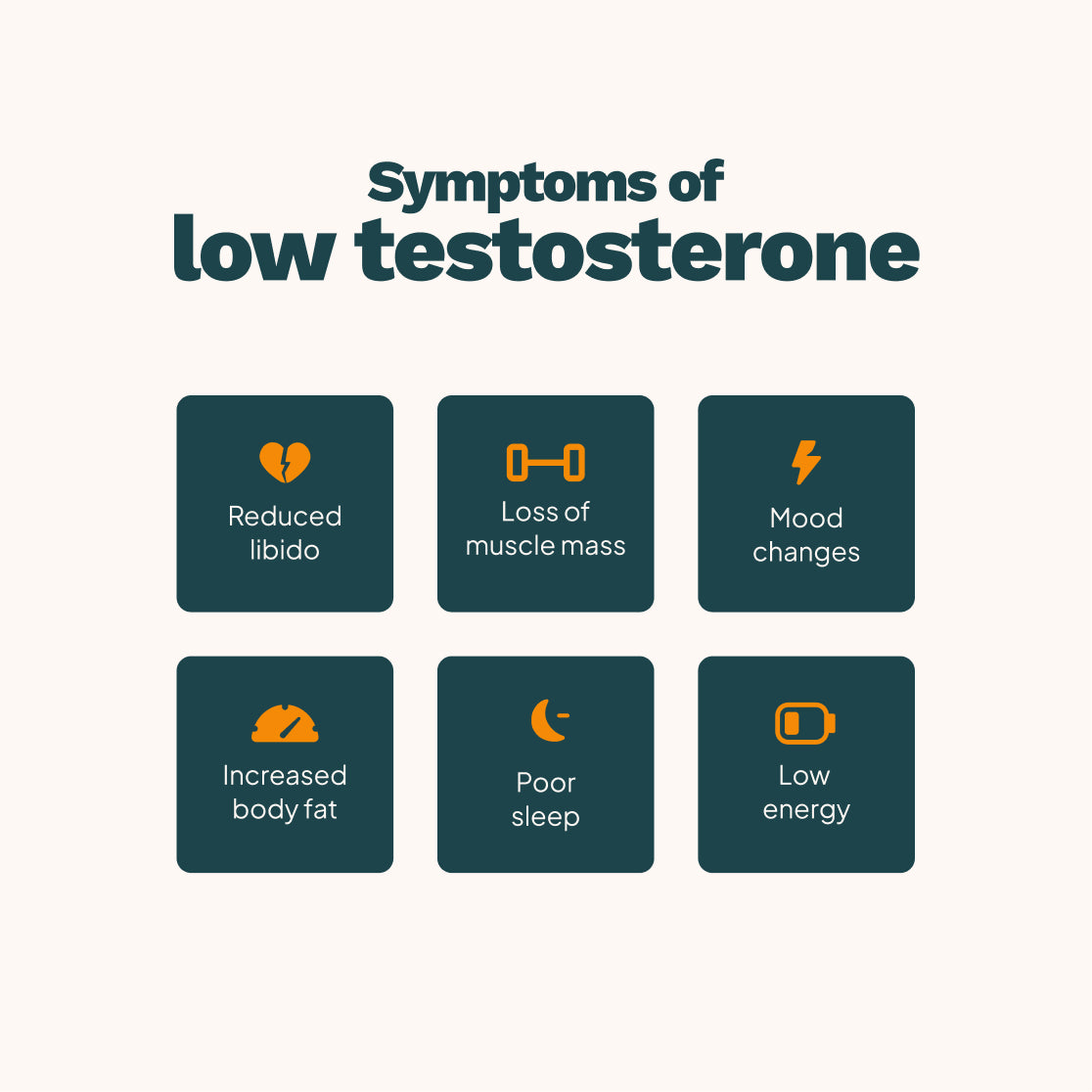
SHBG itself doesn’t usually cause a distinct set of symptoms. Symptoms like low libido, erectile difficulties, tiredness, low mood, and low muscle mass are more likely to relate to low free testosterone or the condition affecting your SHBG.
What causes high SHBG?
SHBG tends to rise with age and tends to be higher in men with a lower BMI [3].
Other causes of high SHBG include [1]:
- An overactive thyroid (hyperthyroidism)
- Liver conditions, including cirrhosis and hepatitis
- HIV
- Some epilepsy medicines
- Oestrogen-containing medicines
- Genetics
A high result doesn’t mean you have one of these conditions. It gives your clinician a reason to look at the rest of your results, medicines, symptoms, and medical history.
What causes low SHBG?
Common causes of low SHBG include [1]:
- Being overweight or obese
- Insulin resistance and type 2 diabetes
- An underactive thyroid (hypothyroidism)
- Steroid medicines, such as prednisolone
- Anabolic steroids
- TRT
- Nephrotic syndrome
- Genetic differences
Low SHBG is strongly linked to metabolic syndrome, but this doesn’t prove that SHBG itself causes it [4]. More often, it’s a clue to look at weight, waist circumference, blood pressure, cholesterol, and blood glucose.
How do you lower SHBG?
In most cases, lowering SHBG isn’t the treatment goal. It makes more sense to find out why it’s high and whether it’s leaving your free testosterone too low.
That might mean:
- Checking thyroid and liver function
- Reviewing medicines that can raise SHBG
- Looking at total testosterone, albumin, and calculated free testosterone together
- Reviewing TRT with your clinician if you’re already on treatment
There’s no supplement that reliably and safely lowers SHBG. Gaining weight or taking excessive androgens may lower the number, but they’re not sensible solutions and can create more serious health problems.
What should you do if your SHBG is low?
Again, the aim isn’t to raise SHBG for the sake of it. Treatment depends on the cause.
If low SHBG is linked to obesity or insulin resistance, improving metabolic health is much more useful than targeting SHBG directly. In men with obesity, weight loss is linked with improvements in both total and free testosterone [5].
If you’re on TRT, a low SHBG makes calculated free testosterone especially important. Increasing your dose based on total testosterone alone could lead to excessive free testosterone and increase the risk of side effects.
Does TRT lower SHBG?
It can. Testosterone and other androgens typically reduce SHBG by around 10–30%, but the effect varies between men and types of TRT [1,6].
Factors affecting SHBG reduction include:
- Type of TRT – injectable TRT usually causes a more marked reduction than gels.
- Dose and protocol – higher weekly doses or less frequent large injections may lead to stronger suppression of SHBG than smaller, more frequent doses.
- Baseline health – pre-existing conditions like insulin resistance, obesity, or diabetes can alter SHBG levels before starting TRT.
A fall in your SHBG level doesn’t mean TRT is working better, and it’s not a reason to change your dose. TRT monitoring should consider your symptoms, testosterone levels, and safety markers like haematocrit.
Read more about target testosterone levels and blood test timing on TRT.
The bottom line
An SHBG result on its own isn’t going to tell you much. It’s always best taken in context.
High SHBG can hide low free testosterone. And low SHBG can make total testosterone appear lower than it really is. In both cases, your blood test results should be interpreted together with your symptoms.
If you have symptoms of testosterone deficiency, or your blood results don’t seem to match how you feel, use our Get Started tool to find the right next step.
References
- Bhasin S, Brito JP, Cunningham GR, et al. Testosterone Therapy in Men With Hypogonadism: An Endocrine Society Clinical Practice Guideline. J Clin Endocrinol Metab. 2018;103(5):1715–1744. doi:10.1210/jc.2018-00229.
- University Hospitals Sussex NHS Foundation Trust. SHBG reference ranges. Updated 2026.
- Marriott RJ, Murray K, Adams RJ, et al. Factors Associated With Circulating Sex Hormones in Men: Individual Participant Data Meta-analyses. Ann Intern Med. 2023;176(9):1221–1234. doi:10.7326/M23-0342.
- Brand JS, van der Tweel I, Grobbee DE, Emmelot-Vonk MH, van der Schouw YT. Testosterone, sex hormone-binding globulin and the metabolic syndrome: a systematic review and meta-analysis of observational studies. Int J Epidemiol. 2011;40(1):189–207. doi:10.1093/ije/dyq158.
- Corona G, Rastrelli G, Monami M, et al. Body weight loss reverts obesity-associated hypogonadotropic hypogonadism: a systematic review and meta-analysis. Eur J Endocrinol. 2013;168(6):829–843. doi:10.1530/EJE-12-0955.
- Conway AJ, Boylan LM, Howe C, Bergman DA, Handelsman DJ. Randomized clinical trial of testosterone replacement therapy in hypogonadal men. Int J Androl. 1988;11(4):247–264. doi:10.1111/j.1365-2605.1988.tb00999.x.

Share: