



Low testosterone, often shortened to low T, is a common condition that can affect energy, mood, sexual health, and physical wellbeing. Low T symptoms are frequently subtle, making it difficult to recognise without proper testing. This guide explains how to know if you have low testosterone and the best ways to treat it.
What does testosterone do?
Testosterone, like other hormones, maintains a wide range of functions. It influences your sex drive, contributes to muscle maintenance, helps regulate body fat, and supports mental focus and motivation. It’s also essential for strong bones and producing red blood cells.
When levels start to dip, it’s often the combination of changes to energy, mood, strength, or libido, that people notice first.
Low T symptoms
Low testosterone can affect men in many ways, and the changes often develop gradually enough that they’re easy to overlook. It’s widely acknowledged that men tend to attribute these changes to ageing or stress, meaning low T often goes undiagnosed for longer than it should [1].
Understanding the broader picture of how testosterone influences the body makes it easier to recognise when something might be out of balance and when testing could be worthwhile.
Sexual symptoms
Sexual symptoms are often the most apparent signs of men’s low testosterone [2].
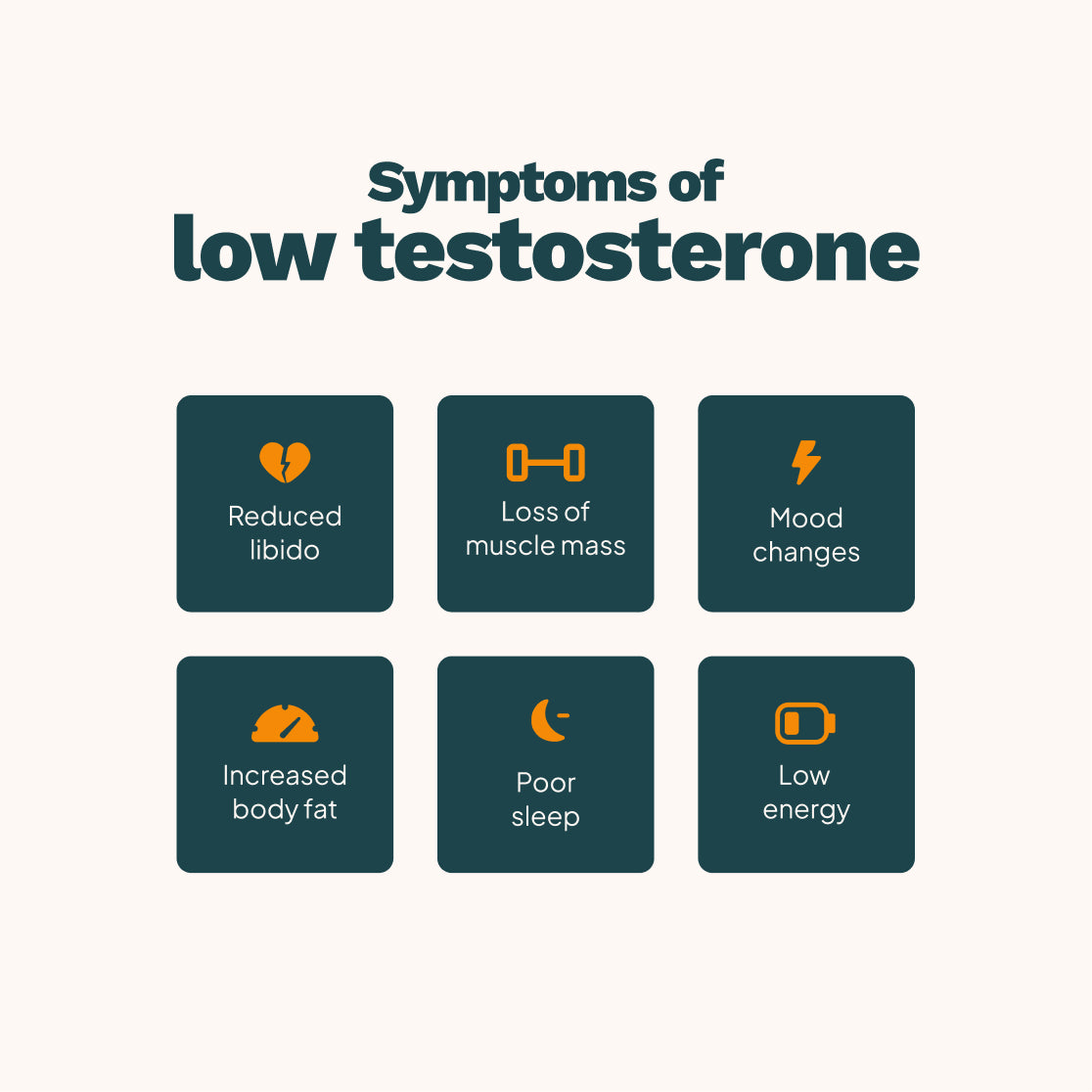
- Low libido
- Erection difficulties
- Fewer morning erections
- Reduced semen volume
Physical symptoms
- Reduced muscle mass or strength
- Increased body fat (particularly abdominal)
- Low energy or persistent fatigue
- Reduced exercise performance
- Loss of body hair or slower beard growth
Psychological and cognitive symptoms
- Low mood or irritability
- Poor concentration
- Reduced motivation
- Sleep disturbances
Experiencing several of these symptoms together may indicate low testosterone and warrant further investigation.
Read our guide to low testosterone for more information.
Men’s testosterone range
In the UK, testosterone is measured as total testosterone in nmol/L, and although ranges vary slightly by laboratory, as a guide, typical healthy male testosterone levels are:
|
Age group |
Men’s normal testosterone levels (nmol/L) [3] |
|
2–10 |
<0.24–0.35 |
|
11–15 |
<0.24–26.25 |
|
16–17 |
7.92–27.0 |
|
18–49 |
8.7–29.0 |
|
50+ |
6.7–25.7 |
The testosterone level for a healthy adult man should be around 8.7–29 nmol/L; however, if it drops below 12 nmol/L, and you show signs of having low T, you may benefit from testosterone replacement therapy (TRT).
How to know if you have low testosterone
A diagnosis of low testosterone requires:
- Symptoms consistent with low testosterone
- Two separate morning blood tests (preferably 3-4 weeks apart) showing low T levels

Start your journey today with a Testosterone Blood Test.
How to check for low testosterone
1. Order a testosterone blood test
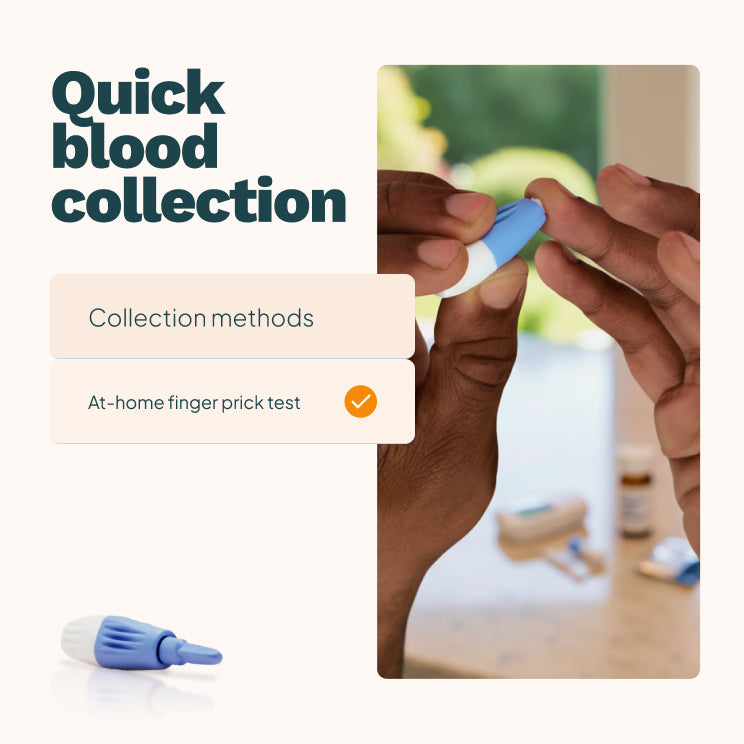
A testosterone check at home uses a finger-prick blood sample which is posted to a laboratory for analysis. This is a convenient first step to know your testosterone level.
2. Read how to take a testosterone test at home
A finger-prick testosterone blood test is a quick, convenient way to measure your testosterone. If you haven't taken one before, you may be wondering how it works. If that sounds like you, watch our 30 second video on how to take a finger-prick blood test.
When should you take your blood test?
Testosterone levels tend to rise overnight and peak in the early morning. The body’s natural rhythm largely guides this pattern.
While you sleep, especially during REM, the brain prompts the testes to boost testosterone production, which is why levels are usually highest first thing in the morning (2). As the day goes on, those levels slowly taper off, making morning tests the most reliable way to get an accurate reading.
To help identify underlying causes and rule out other medical conditions, further investigations may also check:
- Sex hormone binding globulin (SHBG)
- Luteinising hormone (LH) and follicle-stimulating hormone (FSH)
- Prolactin
- Thyroid function
- Blood count
What is TRT for men?
TRT is a medically supervised treatment for men with confirmed low testosterone. It aims to restore testosterone to a healthy range, which can improve any symptoms you may be experiencing.
TRT is generally recommended only when symptoms and blood test results meet the established clinical criteria.
Learn more about the different types of TRT.
How to get TRT
If your symptoms and test results suggest low testosterone, the next step is understanding how treatment is accessed and prescribed. The process is straightforward, but it does involve proper assessment and medical guidance to ensure TRT is safe, appropriate, and tailored to your needs.
Clinical assessment
A clinical assessment is an essential step in determining whether TRT is suitable for you and involves a thorough review of your overall health, including your symptoms, blood test results, and medical history. They’ll also explore any factors that could be contributing to low T, such as obesity, high stress levels, or underlying health conditions. This ensures the correct diagnosis is made and that any treatment plan is both safe and genuinely needed.
Discuss treatment options
If TRT is considered appropriate, your clinician will talk you through the different treatment options, such as injections, gels, or capsules, what to expect, and the potential benefits you may experience. In addition, they will discuss possible risks and side effects so that you can make an informed decision about your care.
Ongoing monitoring
Once treatment begins, regular monitoring makes sure that TRT remains safe and effective. Follow-up blood tests are performed at set intervals to ensure that testosterone levels are within a healthy range and that key safety markers, such as blood counts and, where appropriate, prostate-specific antigens (PSA), remain stable. This ongoing review allows your clinician to adjust treatment if needed and helps maintain long-term safety.
Low testosterone can have a noticeable impact on how you feel day to day, but it’s a condition that’s both easy to check and manageable with the proper support. Understanding the symptoms, knowing when to test, and seeking appropriate medical guidance can help you take control of your health and improve your overall wellbeing.
Not sure where to start? Use our simple Get Started tool.
References
- Edwards, D. & Olding, L. (2015) ‘Lack of awareness contributes to delayed diagnosis and inappropriate management in men with low testosterone: findings from a UK study of men diagnosed with hypogonadism’, Endocrine Abstracts. (Accessed 27 November 2025).
- Bhasin, S., Brito, J. P., Cunningham, G. R., Hayes, F. J., Hodis, H. N., Matsumoto, A. M., Snyder, P. J., Swerdloff, R. S., Wu, F. C. & Yialamas, M. (2018) ‘Testosterone Therapy in Men With Hypogonadism: An Endocrine Society Clinical Practice Guideline’, The Journal of Clinical Endocrinology & Metabolism. (Accessed 27 November 2025).
- Smith, J. (2024) ‘What is a normal testosterone level for your age?’, Medichecks. (Accessed 28 November 2025).
- Rehagen, T. (2024) ‘Testosterone: When and How to Balance Low T’ (Accessed 5 December 2025).

Share:
Is male menopause (andropause) real?