



With any significant weight loss, the body can lose some lean mass as well as fat, especially if weight comes off quickly, protein intake is low, or resistance training isn’t part of the plan.
This article explains why muscle loss can happen during weight loss, what this means if you’re using weight loss injections or weight loss tablets, and how protein, resistance training, appropriate monitoring, and clinical support can help preserve muscle.
- What is GLP-1 weight loss medication?
- Can weight loss injections cause muscle loss?
- Do weight loss tablets cause muscle loss?
- Lean mass is not the same as muscle
- How much lean mass is lost during GLP-1 treatment?
- Why muscle preservation matters in men
- Why muscle loss can happen during GLP-1 treatment
- How to preserve muscle while losing weight
- Is muscle loss inevitable with GLP-1 medication?
- When should you seek advice?
What is GLP-1 weight loss medication?
Weight loss medication can be used to support weight management in people who meet the appropriate clinical criteria. It’s intended to be used alongside changes to diet, physical activity, and wider lifestyle rather than as a stand-alone treatment.
GLP-1 weight loss medications work on hormone pathways involved in appetite, fullness, and glucose regulation, and the two active ingredients are:
- Semaglutide, the active ingredient in Wegovy, mimics GLP-1, a naturally occurring gut hormone involved in appetite regulation. Wegovy is available as a weekly injection and, more recently, as a daily tablet for weight management [1,6].
- Tirzepatide, the active ingredient in Mounjaro, acts on two hormone pathways – GLP-1 and GIP – and is given as a weekly injection [2].
Injectable and oral medicines may not be interchangeable. Different treatments work in different ways and have their own eligibility criteria, dosing schedules, benefits, and potential side effects.
Can weight loss injections cause muscle loss?
Weight loss injections can contribute to some lean mass loss, but this isn’t unique to GLP-1 medications.
Whenever you lose weight, your body typically loses a combination of fat mass and lean mass. In many people, around 20-40% of the weight loss may come from lean mass, although this varies depending on factors like protein intake, resistance training, age, starting body composition, and the speed of weight loss [3].
The aim is for most weight loss to come from fat. However, if the calorie deficit is large, protein intake is inadequate, or muscles aren’t challenged through regular resistance exercise, a great proportion of lean tissue, including skeletal muscle, may be lost.
Do weight loss tablets cause muscle loss?
Potential muscle loss isn’t simply an injection issue.
Oral Wegovy contains semaglutide, the same active ingredient used in injectable Wegovy. Clinical research has shown that oral semaglutide can produce substantial weight loss [6].
As with injectable treatment, significant weight loss means some lean tissue may be lost alongside fat. The important factors are likely to be the amount and speed of weight loss, what you’re eating, how active you are, and whether you're giving your muscles a reason to stay strong.
So, whether you're taking weight loss tablets or injections, protecting muscle should be part of your weight loss plan.
Lean mass is not the same as muscle
Lean mass includes skeletal muscle, but it also includes water, bone, organs, blood, connective tissue, and other non-fat tissue. A reduction in lean mass doesn’t automatically mean the same amount of skeletal muscle has been lost.
Some of the reported reduction in lean mass during weight loss may reflect changes in body water, organ size, liver fat, or other tissues, not muscle alone.
Even so, preserving skeletal muscle is important. Skeletal muscle supports mobility, strength, glucose metabolism, and healthy ageing.
How much lean mass is lost during GLP-1 treatment?
The amount of lean mass lost during weight loss varier between individuals and depends on several factors, including:
- The medicine used
- Starting weight
- Age
- Baseline muscle mass
- Activity level, particularly resistance training
- The rate of weight loss
- How body composition is measured
Concerns about semaglutide muscle loss and tirzepatide muscle loss usually relate to lean mass changes observed during significant weight loss. Clinical trials show that semaglutide and tirzepatide can produce substantial weight loss, and body composition studies suggest that most of the weight loss is fat mass. However, some lean mass may also be lost [4,5].
The aim isn’t to avoid weight loss because lean mass may decrease. It’s to support weight loss in a way that helps preserve skeletal muscle through adequate protein intake, resistance training, and ongoing clinical monitoring.
Why muscle preservation matters in men
Preserving muscle during weight loss is not just a gym-related concern. It can be a medical issue.
Muscle helps support:
- Strength
- Mobility
- Balance
- Glucose metabolism
- Physical independence
- Recovery from illness or injury
- Long-term weight maintenance
Loss of muscle becomes more relevant with:
- Age
- Type 2 diabetes
- Low baseline activity
- Previous rapid weight loss
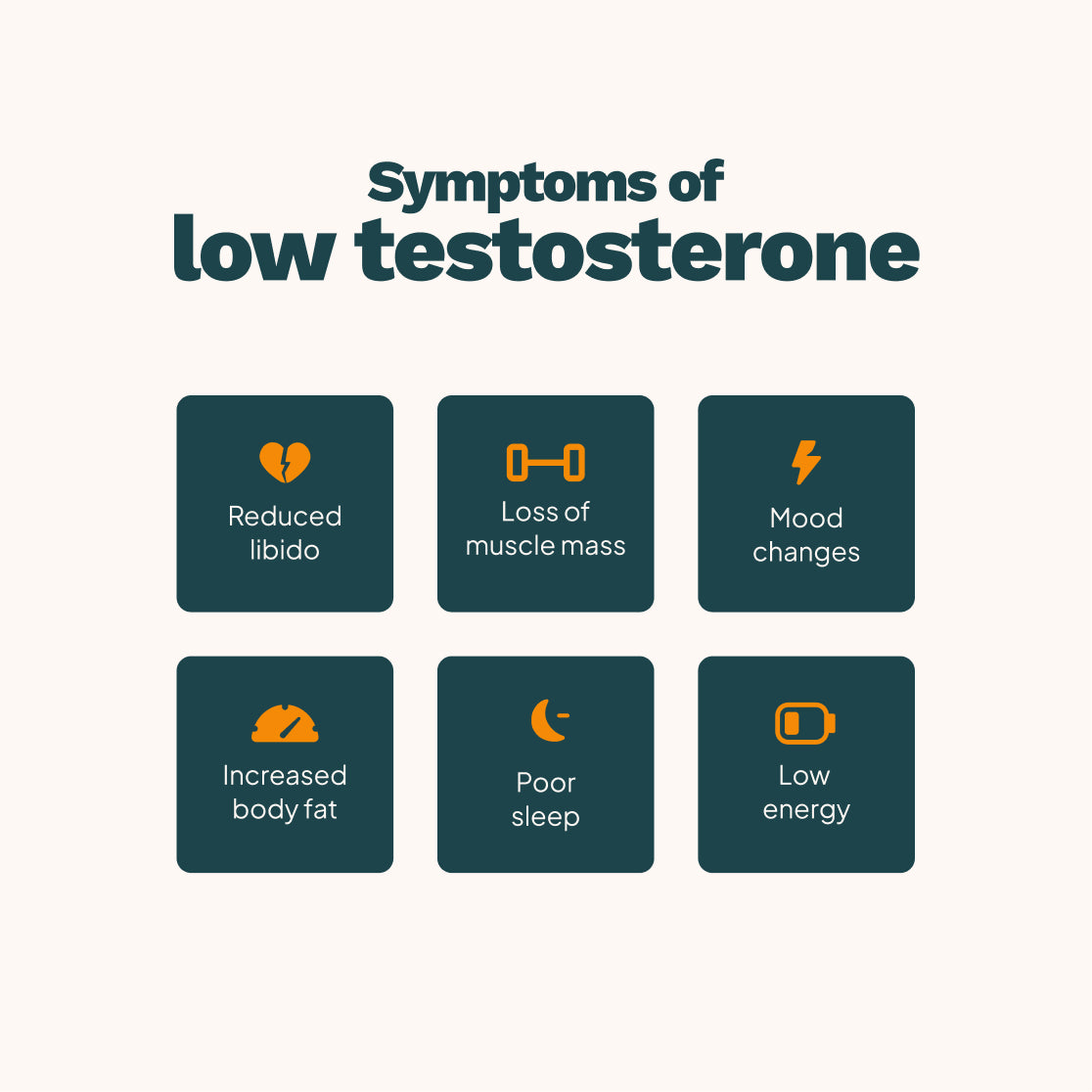
- Symptoms of testosterone deficiency
If you're using weight loss medication alongside TRT, losing excess fat may offer important metabolic benefits, but maintaining muscle still matters. Your clinician can help you consider the bigger picture rather than focusing purely on the number on the scales.
Why muscle loss can happen during GLP-1 treatment
GLP-1 medicines reduce appetite, but they can also reduce total food intake to the point where protein, calories, and micronutrient intake become insufficient.
Common issues include:
- Eating too little overall
- Skipping meals because the appetite is very low
- Prioritising small, low-protein foods
- Stopping exercise because of nausea, reflux, constipation, or fatigue
- Losing weight faster than planned
- Not adjusting the plan as the dose increases
These issues can apply whether you're taking a weight loss tablet or an injection. The aim isn't simply to eat as little as possible. You still need enough nutrition to support muscle, everyday activity, and your wider health.
How to preserve muscle while losing weight
Prioritise protein
Protein intake is central to preserving lean tissue during weight loss. During a calorie deficit, your body needs enough amino acids to support muscle maintenance and repair.
A practical approach is to include protein at each meal.
Suitable options may include:
- Lean meat
- Fish
- Eggs
- Greek yoghurt
- Cottage cheese
- Tofu
- Tempeh
- Beans
- Lentils
Men with kidney disease or other relevant conditions should get individual advice before increasing protein intake.
Use resistance training
Resistance training can help maintain muscle strength during weight loss. Exercises don’t need to be extreme or bodybuilding focused.
They may include:
- Weights
- Resistance bands
- Gym machines
- Bodyweight exercises
- Squats to a chair
- Step-ups
- Press-ups against a wall or bench
- Supervised strength work if mobility is limited
Avoid excessive calorie restriction
GLP-1 treatment can make it easier to cut back on food, but if you’re eating too little, you may feel more tired, find exercise harder, and struggle to get enough protein.
If your appetite is very low, nausea is persistent, or meals are regularly missed, your dose or eating pattern may need to be reviewed.
Keep daily activity in the plan
Regular movement, such as walking, cycling, swimming, gardening, or simply staying active day-to-day, can help preserve physical function as your weight comes down.
Monitor function, not just weight
Scale weight is useful, but it’s not everything. You may hear about NSVs (non-scale victories), which are helpful when you feel a difference, but the number on the scale is staying the same.
It may also be worth tracking:
- Waist measurement
- Strength
- Walking tolerance
- Energy
- Training performance
- Blood pressure
- Blood glucose markers
- Clothes fit
- Ability to manage daily tasks
Is muscle loss inevitable with GLP-1 medication?
Some lean mass loss is common during substantial weight loss, regardless of whether it happens through diet, weight loss pills or tablets, injections, or a combination of approaches. But the amount varies considerably.
Your starting muscle mass, age, rate of weight loss, protein intake, physical activity, and resistance training all influence what happens to your body composition.
Research increasingly suggests that the focus shouldn't just be on how much weight you lose, but on the quality of that weight loss – losing excess fat while protecting muscle, strength, and function where possible [7].
When should you seek advice?
Seek advice if you’re using weight loss medication and notice:
- Reduced strength
- Worsening fatigue
- Poor exercise tolerance
- Dizziness
- Persistent nausea
- Difficulty eating enough
It’s also worth seeking advice if you’re worried about muscle loss or losing weight faster than expected.
Not sure where to start? Use our simple Get Started tool.
References
-
Novo Nordisk (2026) Wegovy 1.5 mg tablets: Summary of Product Characteristics. Electronic Medicines Compendium. Available at: https://www.medicines.org.uk/emc/product/102344/smpc (Accessed: 28 July 2026).
-
European Medicines Agency (2026) Mounjaro: EPAR – Medicine overview. Available at: https://www.ema.europa.eu/en/medicines/human/EPAR/mounjaro (Accessed: 28 July 2026).
-
McCarthy, D. and Berg, A. (2021) Weight loss strategies and the risk of skeletal muscle mass loss, Nutrients, 13(7), 2473. doi: 10.3390/nu13072473.
-
Wilding, J.P.H., Batterham, R.L., Calanna, S., Davies, M., Van Gaal, L.F., Lingvay, I., McGowan, B.M., Rosenstock, J., Tran, M.T.D., Wadden, T.A., Wharton, S., Yokote, K., Zeuthen, N. and Kushner, R.F. (2021) Once-weekly semaglutide in adults with overweight or obesity, The New England Journal of Medicine, 384(11), pp. 989–1002. doi: 10.1056/NEJMoa2032183.
-
Jastreboff, A.M., Aronne, L.J., Ahmad, N.N., Wharton, S., Connery, L., Alves, B., Kiyosue, A., Zhang, S., Liu, B., Bunck, M.C. and Stefanski, A. (2022) Tirzepatide once weekly for the treatment of obesity, The New England Journal of Medicine, 387(3), pp. 205–216. doi: 10.1056/NEJMoa2206038.
-
Wharton, S., Lingvay, I., Bogdanski, P., Duque do Vale, R., Jacob, S., Karlsson, T., Shaji, C., Rubino, D. and Garvey, W.T. (2025) Oral semaglutide at a dose of 25 mg in adults with overweight or obesity, The New England Journal of Medicine, 393(11), pp. 1077–1087. doi: 10.1056/NEJMoa2500969.
-
Eisa, N. and Barood, O. (2026) Lean mass changes with incretin therapy versus lifestyle intervention: A systematic review and meta-analysis of randomised controlled trials, Diabetes, Obesity and Metabolism, 28(6), pp. 4818–4827. doi: 10.1111/dom.70666.

Share:
High haematocrit on TRT: when should you be concerned?
GLP-1 weight loss injections and tablets for men: how they work and who they’re for